I Love My Garden!

image

(Image Credit: timelesswheel)

It’s yet another heavy, darkly overcast day and I felt so disappointed that yet again there was no sun showing off the garden to it’s best advantage. Yesterday, I had watched as the rain distorted the view we have from our kitchen window, and sighed. I have always looked forward to this time when all the blossom and the rhododendron flowers burst forth in a synchronised display and the garden looks altogether very pleased with itself.

I could see that there would be more heavy rain before long which might ruin the display so, checking first that it didn’t feel as wintry as it looked, I decided to make the most of it and sit outside drinking not only a cup of licorice and cinnamon tea, but also drinking in the spectacularly colourful show around me.

I love my garden. I love the peace of it. I can sit there in contemplation and hear only the birds, the bees, the occasional thwack of leather on willow in the distance (that’s cricket to my American readers!) or wood on wood from the local bowling green. Sometimes I can hear young children laughing and splashing in their paddling pool – children laugh so uninhibitedly, it always brings a smile to my face.

My garden is not perfect by any stretch of the imagination; it is informal, wild plants have insinuated themselves and been welcomed if they fit and don’t get greedy, while other cultivated plants have self-seeded in nooks and crannies, like the pink nemesia covering an ugly corner of the path, and have been allowed to take up residence.

I never fail to have my spirits restored and uplifted when I’ve been in my garden, even for just five minutes. Breathing in the fresh air scented with floral perfumes and sometimes wood smoke fills me with joy and gratitude. I feel renewed. Any stresses and frustrations are lifted for a while as my brow unfurrows and I lift my gaze from the ground and up towards the sky, the trees, the shapeshifting clouds.

I am always grateful that I have been fortunate to have this space and I wanted to share a part of it with you.

Forgive the quality of the pictures, I only have the iPad camera!

This slideshow requires JavaScript.

The baby apple tree will hopefully have a better backdrop soon: my lovely daughter has volunteered to paint the garage against which it stands after I gave up on the fairies performing this kindness over the past couple of years!

This slideshow requires JavaScript.

The bright pink azalea and the irises are from last year when the sun was more generous with its rays, this year the frosty hail and constant rain destroyed the azalea flowers before they could sit for a while and be admired, while the irises are still thinking about waking up.

I hope you enjoyed the show!

Copyright: Chris McGowan

Earth Day Comp: And The Winners Are…

Drum roll please …

Riot Grrill and Alexander West!

Congratulations!

If you will get in touch via

contact@gripandgo.co.uk

and leave your details plus the colours you would like in each of the 350ml, 500ml and 1 litre bottles as well as a travel mug, they will send off your prize asap.

But wait…

Grip and Go don’t want anyone to lose out, so they have generously given you all a

25% Off Discount Code:

Use STILLWINNERS at the checkout

Please Like and Follow @GripandGoUk on Twitter Or on Facebook

This code must be used by midnight on Friday, 6th May, 2016

(sorry  UK residents only)

Visit the Grip and Go website and look at their range of stylish glass bottles and double-insulated travel mugs!

Treat yourself or buy someone a gift. Great for storing juices, nut milks and water. Much better for you and the environment than single-use plastic water bottles.

Thank you all for taking part and to Grip and Go for a great prize!

Copyright: Chris McGowan
Last Day of our Grip and Go Competition!

Today is the last day of our Earth Day Competition!

You can win 3 Grip and Go leakproof, dishwasher-safe glass bottles plus a fabulous double-insulated glass travel mug in whatever colours you choose.

They are great for storing juices and nut milks or carrying water around, much better for you and the environment than single-use plastic water bottles which inevitably end up in landfill and in our oceans.

All you have to do is Like and Follow Grip and Go on Twitter and/or Facebook and use #earthdaycomp.

That’s it!

Here are the links:

@gripandgouk on Twitter

Grip and Go on Facebook

Hurry!

The competition ends midnight tonight, Friday, 29th April, 2016.

Ditch the plastic!

Good luck!

Copyright: Chris McGowan
Earth Day Comp: Win Stylish Grip & Go Glass Bottles & Let’s Ditch the Plastic!

[ Thank you for visiting, this competition is now closed, but please do read the post anyway…]

Today is Earth Day and to celebrate our amazing planet, I am holding a competition to win a generous giveaway of 2 prizes of not one, not two, but THREE Grip and Go glass bottles! And that’s not all…

Many of you have admired my Grip and Go bottles that I use for storing nut milk and now you have a chance to win your own, thanks to their kind donation of some fabulously stylish bottles – plus an added extra…

But first, there’s a condition:

You have to Read ‘The Science Bit’!

We have all seen the warnings in the media about the piles of plastic clogging up our oceans, littering our hedgerows and harming wildlife. We read the articles and watch the news heralding predictions that there will be more plastic than fish in our seas by 2050 – whilst sipping from our plastic water bottles, popping the plastic takeaway box in the microwave and wrapping leftovers in clingfilm.

It is hard to contemplate a world without plastic, we have grown so used to it in every aspect of our daily lives.

But its production and disposal is choking our planet and harming our health, with chemicals leaching into our food and water, potentially causing cancer, hormone disruption and asthma in children.

Plastic water bottles are a huge contributor to these problems.

💧💧💧💧💧💧

Warm Weather and Plastic Water Bottles

How many of us carry plastic water bottles in the car and leave them there in the sun, often for several days?

Chemicals from the plastic are slowly leaching into the water as the plastic warms up:

  • Antimony (causes chronic health conditions, including diarrhoea, vomiting and stomach ulcers)
  • Bromine (causes irritation to skin and mucous membranes)
  • Endocrine Disrupters affecting hormones, thyroid function etc.
  • Cancer-causing agents 
  • Phthalates used as plastic softeners, associated with asthma in children.

Those plastic bottles will already be old by the time you buy them, having travelled halfway around the globe before you put them in your supermarket trolley, transport them in your warm car and store them in your warm home.

Some well-documented statistics about plastic bottles:

  • In the US, 50 Billion plastic bottles are bought every year and 80% of them end up in landfill.
  • More than 60 Million plastic bottles are thrown away every day in the US alone.
  • Just 1 plastic bottle takes 450 years to completely break down – that’s 25 generations!
  • 17 million barrels of oil are used every year in their production.
  • Bottled water costs 1,000 times more than tap water.

  • In the UK, as of 2007, an estimated 13 Billion plastic bottles of water were sold of which only 3 Billion were recycled.
  • The UK consumes 3 Billion litres of bottled water per year.
  • Despite the UK bottled water industry using increasing amounts of recycled plastic, it still creates a huge waste problem from discarded bottles which litter our hedgerows, streets and streams and often end up in the sea via our rivers.

  • 1 refuse truck worth of plastic is dumped into the sea every minute and it is getting worse.
  • The Eastern Garbage Patch is an area of ocean 6 times the size of England and is the world’s largest refuse dump.

  • Last year, a report by The Ellen MacArthur Foundation announced that by 2050 there will likely be more plastic than fish in the sea.
  • Their research found more than 5 Trillion pieces of plastic floating in the seas, many just 5 mm across making it easy for sea life to ingest.
  • Toxic chemicals leached from the plastic when it breaks down may be ingested by sea life and end up in the human food chain.

Here’s one solution:

Reuseable Glass Bottles!

Grip and Go have very generously supplied 6 of their stylish, leakproof, dishwasher-safe glass bottles as prizes in our competition.

350 mls.                    500 mls.                        1 Litre.

There will be two prizes of three bottles each, one prize to be won on Facebook, one on Twitter. You can even choose the colours!

But that’s not all!

In addition to the bottles, there will also be two Double-walled Insulated Travel Mugs, one to go with each prize.

image

This is a fantastic prize.

All you have to do is Like and Follow Grip & Go on Facebook and/or Twitter (@gripandgouk) for a chance to win these gorgeous bottles.

The competition will run from Mid-day Friday, 22nd April, 2016 and end at Midnight on Friday, 29th April, 2016.

Winners will be chosen at random.

(NB Apologies to all non-UK residents: due to the nature and weight of the prize, unfortunately this competition is only open to UK-based followers).

Just click on the link below to go to their web site, have a look at the bottles and travel mugs, decide which colours you’d like, click on their Twitter and Facebook links, Like And Follow using #earthdaycomp.

Like and Follow. #earthdaycomp. Easy-Peasy!

Good Luck!

Grip and Go

Twitter: @gripandgouk

Grip and Go Facebook link

Sources:

 Treehugger

Ban the Bottle

The Ellen MacArthur Foundation

The Guardian

Io9 We Come From The Future

Copyright: Chris McGowan

Earth Day: Microbeads – What Are They Good For…? (Includes Products That Dont Use Them).

…Absolutely Nothing!

(For Earth Day, I am republishing this post from last year, the Prime Minister may have left, but the issue remains.)

More than a quarter of a million people have signed a petition organised by Greenpeace, The Environmental Investigation Agency, the Marine Conservation Society and Fauna and Flora International calling on UK Prime Minister, David Cameron, to introduce a ban on the use of microbeads.

Barack Obama has banned them in the US, they are banned in Canada and many other countries are discussing a ban.

What are Microbeads?

Microbeads are tiny beads of plastic used in the manufacture of many toiletries and cosmetics. They act as exfoliants in products like toothpaste, facial cleansers, soaps and body scrubs, cleaning products.

Why should they be banned?

Tiny plastic microbeads can’t be filtered out by our sewage system and they end up in our rivers, lakes, seas and oceans. They are a massively polluting substance. Because they are so tiny, they become ingested by all kinds of sea life: birds, whales, turtles, fish, plankton, bivalves and so on. Most birds studied have been found to have microbeads in their stomachs.

Not only do they harm the species that swallow them but they can harm us too, for example when we use toothpaste and eat fish. Some end up in our soil via fertilisers.

8 Billion tonnes of plastic are disposed of in the oceans every year, do we really need plastic microbeads adding to the problem?

There are many more ethical and natural alternatives for example, seeds, cellulose, nut kernels, sugar, oatmeal and salt.

Many organisations and companies are calling for microbeads to be banned, some have agreed to phase them out, others have stopped using them. According to Greenpeace, Asda, Boots, Avon, L’Oreal, Clarins and Bodyshop have all pledged not to use microbeads in their own products. Other companies have made statements announcing the phasing out of microbeads from their products: Proctor and Gamble, Unilever.

The Co-Operative doesn’t use them at all.

image

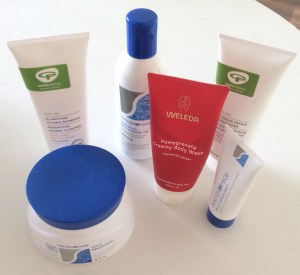
My personal favourite, Dead Sea Magik products don’t contain microbeads or other nasties, are vegan, moisturising, gently exfoliating and you only need a tiny amount so they last a long time too.

1F6AFEA3-1A9C-4422-973E-2492968884EFGreen People organic products have won over 100 awards and are free from microbeads. Most of their products are vegan. Again, a tiny amount is needed, so although they may seem expensive, they last for ages.

They also use recyled and recyclable packaging.

Weleda use natural ingredients, working in harmony with nature, with no petrochemical derivatives, and many of their products are vegan.

We can all help by signing the Greenpeace Petition and by buying our toiletries and cosmetics from companies that don’t use microbeads – or make our own! There are many sites that have recipes for DIY cleansers, exfoliators and moisturisers using coconut oil, avocado and so on.

 Sources:

Greenpeace

Beat the Microbead

Plastic Free Seas

Copyright: Chris McGowan

Water: They Can’t Get Enough, But We Can Help!

Recently, while I was thinking of writing a post on hydration, there was a sudden deluge (pardon the pun) of articles and tweets on the subject. Everywhere I looked, someone was urging that I drink more water. I thought to myself, If I drink any more, I’ll float away! But as I sipped my regular morning hot water and lemon and then had a shower and washed my hair, cleaned my teeth and flushed the loo, I started musing on how much we take our clean water supply for granted and how much we complain about the incessant rain.

Have you ever experienced a drought, even temporarily? I have.

Have you ever had to use a stand pipe down the street in one of the hottest summers on record and queue up for a restricted amount of water, carry heavy containers home, ration it out, use the same washing water for all the family, then use it to flush the toilet that has had to be used several times without? I have.

Have you had to do this with a toddler still in nappies – cloth ones that needed sterilising? Or with a baby using feeding bottles? I have. Have you ever been heavily pregnant during a hot summer and had the water go off because of a burst pipe, making it necessary to walk a couple of streets away to the nearest public toilet for a day and a night? I have. During that hottest summer, I was also coping with a slipped disc.

It was indescribably difficult.

Yet our difficulties and inconveniences (pun intended) were nothing compared to those endured week in week out, by millions of families in developing countries where mainly wives, mothers, sisters and daughters spend hours every day walking miles to collect water that is often contaminated with bacteria, parasites and disease, for example E. Coli, Cholera and Hepatitis A.

Between 600 and 700 million people have no clean drinking water, while over 2 billion do not have access to toilet facilities.

image

Image from Jerry Bottles

While I was contemplating this, tweets began appearing on my timeline about Matt Damon and Gary White’s charity Water.org and the British organisation, Water Aid UK. Then purely by chance, someone called @jerrybottles liked one of my tweets. I looked them up. While I did so, two other companies showed up: Conscious Step and Three Avocados.

These companies have one thing in common: they are non-profit businesses that sell unique products to raise money for clean water projects around the world.

100% of their net profits go to these projects.

This all seemed serendipitous and I decided to promote their organisations via my blog. If one person buys one item after reading this, then I will feel like I’ve done something worthwhile.

These companies sell very different quality products and I want to point out that I haven’t been given any to promote, nor have I purchased or used any of them. Purely and simply, I looked at their web sites and products, read their missions and wanted to help in this small way.

First up is Jerry Bottles

image

Leicester-based businessman, Harun Master, set up his charity in 2011 to help fund and co-ordinate clean water schemes in India and Africa. Their stainless steel bottles – named after the large jerry cans used by women to collect their water – are stylish, dishwasher safe and sustainably produced. Along with Tobias Gould and Taj Bharma, he built a company whose mission is to educate about pollution caused by plastic bottles, encourage the use of refillable steel bottles and use the profits to provide safe, clean water – starting in Tanzania. As a bonus, the co-ordinates of each project will be printed on the base of the bottles so you can see where the proceeds from your purchase have been put to use. They keep costs and staffing low to maximise the funds available for the schemes.

image

They are also working with local shops and businesses to build a scheme whereby you can refill your Jerry water bottle for free when out and about. They aim to add to their range by working with designers to create additional quality bottles and accessories. The web site is informing and fun, as are their tweets!

Three Avocados is the fascinating name of a coffee company in St Louis, Missouri, founded by Joe Koenig in 2010 after a trip to Uganda. The poverty surrounding him inspired him to set up a company which sells 100% Arabica coffee – produced by small farmers in Uganda and Nicaragua for fair prices – and donates all its net profits to clean water projects worldwide. One of their partners is a women’s co-op which uses the money earned from growing coffee to send their children to school.

image

In Uganda alone, without clean water, 63 children die every day. Since the company started, over 20,000 people have benefited.

image

Women and girls are usually the ones who walk miles every day to collect large jerry cans of contaminated water. They are unable to work or attend school. They are at risk of assault. Providing clean water allows them to gain an education and employment as well supporting a healthier community.

image

Oh, and why is a coffee company called Three Avocados? Well, visit the web site and read their story – just have some tissues handy when you do.

Conscious Step is the brainchild of 3 like-minded men: Hassan Ahmad, Adam Long and Prashant Mehta, left their respective careers at the World Health Organisation, Engineers Without Borders and in Microfinance, and came up with the quirky idea of selling uniquely designed and manufactured Socks for Causes,  to combat Hunger and HIV/Aids, promote Education and provide Clean Water.

image

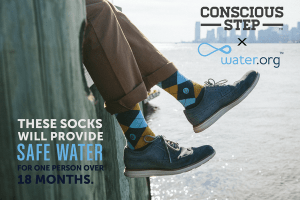
In partnership with Water.org net profits from these blue Argyle socks provide clean water for one person for 18 months!

image

(Images from Conscious Step)

The socks are certified Fair Trade and are made from organic cotton using non-toxic dyes.

I asked in my previous post ‘ What Colour’s Your Wee?! Water: Part 1 – Are You Getting Enough? Well, for some, this question is moot. They can’t get enough. What they can get is more often than not a long trek away and unsafe to drink.

You can help change that.

Copyright: Chris McGowan

Sprouting for Health, Energy and the Environment!

Recently I published a recipe for Warming Stir-Fry with Avocado, Alfalfa and Sprouted Beans and was asked where to obtain the beansprouts. Well, the answer is, your kitchen counter!

It so easy to grow your own, takes no time or effort and they provide protein and oodles of more useable nutrients than cooked foods. Enzymes, vitamins, minerals, fibre and essential fatty acids (that burn fat and are usually in short supply in most diets) increase dramatically during the soaking and sprouting process and are more easily absorbed by the body.

Not only are homegrown sprouts good for body and soul (growing your own is a satisfying and life-affirming activity), but they are also good for the environment. Buy organic, untreated seeds, nuts, beans or legumes and you omit nasties: pesticides, additives and other unwanted chemicals. Ready grown sprouts are often treated with chemicals before packaging. (NB You need to buy seeds from a health food shop/supermarket or online eg Amazon etc NOT a gardening shop!)

They are inexpensive, 1 tablespoon of seeds produces several days’ worth of sprouts – depending on how often and how many people eat them! You can rotate the varieties and have your own little sprout garden in your kitchen, producing nutrient-dense plants for your salads, sandwiches and lunch-boxes and the children will enjoy the process of soaking, watering and watching them grow as well as benefiting from the foods themselves.

So, what do you need and how do you do it?

There are 3 methods: the third actually produces microgreens, a stage further on than sprouting and involves soaking seeds and sprinkling them on a tray of organic soil, watering and letting them grow. But we want to produce sprouts, so you need either a sprouting tower like this one:

This thirty-year-old tower has 3 sprouting trays, a lid that is ventilated to allow air to circulate and a bottom tray where the water drains off – if buying new, check it is BPA-free

or large, wide-mouth mason jars with either sprouting lids (available from healthfood stores or online), cheesecloth or muslin and a rubber band to keep it in place.

You can sprout most seeds, nuts, beans or legumes – except kidney beans, they are poisonous if eaten raw.

For either method, the first thing you need to do is wash your hands – hygiene is important, then rinse the seeds and pick out any grit or discoloured or broken ones and soak them overnight in pure water. For 3 trays, you could use 1-2 teaspoons of alfalfa or broccoli seeds between 2 of them and 1-2 tablespoons of mung beans in the third. Use 3 times as much water as seeds. (Broccoli seeds provide many times more nutrients than normal broccoli).

image

(If using jars, you can put them straight into the containers). Next morning, drain them into the trays and rinse again (one type of seed per tray, they all grow at different rates).

Rinse and drain twice a day, pouring away the excess water.

image

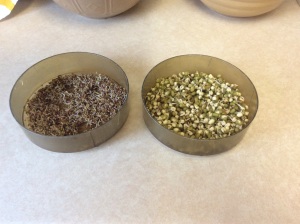
After Day 1, the mung beans have swollen and are beginning to sprout.

For the jars, cover and stand upside down, if possible at a slight angle, and rinse at least twice a day.

The sprouts will grow faster in warmer weather and in exceptionally hot weather may need an extra rinse. Don’t let them dry out but don’t overwater! Be sure to drain off the excess to prevent mould and bacteria developing.

image

After 2 days, they are well on their way. These were growing during a very cold February.

image

3 days and the mung beans are about an inch long and ready to use! The alfalfa needs another couple of days.

image

When you harvest the mung beans, rinse and either store them as they are, covered in the fridge – they will last up to a week or more – or place in a bowl of water, swish them around and the green hulls will float off and can be removed if desired. Some people think they are a little bitter, but of course you will be discarding nutrients too.

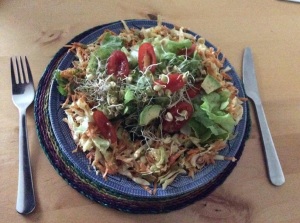
The sprouts can be used in salads, sandwiches, with stir-fries or as garnish for warm soups (the less heat the more nutrients you retain).

image

Sprouted seeds, beans, nuts and legumes are highly nutritious and are particularly rich in Vitamins A, B Complex, C and E, but alflafa is also a good source of Calcium, and a very good source of Vitamin K, Folate, Iron, Magnesium, Phosphorus, Zinc, Copper and Manganese.

image

28596240_Unknown

Broccoli Sprouts

You can have a lot of fun with the kids using alfalfa sprouts:

image

There have been comments in the media about the dangers of ecoli in beansprouts. Firstly, I would say commercial enterprises don’t much like us growing our own rather than buying their nutrient-poor, mass-produced products and secondly, providing you keep up your hygiene standards: wash your hands, drain off the soaking water and scrub out the trays/jars, then all should be fine.

We have been growing sprouts for 30 years and neither my family nor friends have had one problem with ecoli.

I hope this helps inspire you to start producing your first beansprouts.

Copyright: Chris McGowan