B12: What Is It & Do We Need to Supplement?

After ‘Where do you get your protein/calcium/iron from?’ most vegans will sooner or later have to face the B12 question.

It is an important topic, but not just for vegans: B12 deficiency can occur in meat-eaters (farm animals are often deficient and require supplementation),  as well as pregnant women and breast-fed infants whose mothers are vegan, whilst the over-50’s can be deficient due to poorer absorption.

So what is B12, why do we need it, where do we find it, how much do we need and in what form?

B12 is a water-soluble vitamin that is one of the compounds required by the body to convert food into energy. It is required for a healthy nervous system, good bone health and in the development and protection of nerve cells and red blood cells.

B12 deficiency can have severe effects on adults, babies and children, long-term vegans, raw food and macrobiotic vegans, the breast-fed infants of vegan mothers and can lead to serious complications in pregnancy such as pre-eclampsia and neural tube defects.

Symptoms of deficiency can be fatigue, anaemia, poor concentration, gastrointestinal disorders, tingling in hands and feet, and irritability. Severe deficiency can lead to nerve damage, Alzheimer’s disease, pernicious anaemia, spinal cord degeneration and heart disease. There is a also a higher risk of bone fractures.

B12 is produced by micro-organisms and is present in the soil in which we grow our food – or at least, it used to be. A combination of demineralisation through modern farming methods and our concerns about hygiene and bacteria – resulting in the cleansing of soil from vegetables – means we can’t just rely on normal food sources: we are advised to include fortified foods or take supplements.  Well, some experts do and some aren’t too sure! More on this later.

Non-vegans routinely obtain B12 from animal sources: cooked liver, fish/seafood, poultry, eggs, milk amd cheese. However, as I said earlier, these sources are becoming less reliable and older people whether omnivores or vegans are less able to absorb the amounts necessary for healthy bodily functions.

Recommended daily amounts tend to vary from country to country, so you may need to do a little research to find out if you are getting enough.

The Vegan Society in the UK recommends eating fortified foods such as breakfast cereals, plant milks, yeast extract or nutritional yeast with every meal to obtain 3 mcg (micrograms) per day OR a daily supplement of at least 10 mcg OR a weekly supplement of at least 2000 mcg. Good quality organic Aloe Vera juice is also a good source of B12.

It is best to take little and often but the less often you have it the more your body needs, so a higher dose weekly supplement should also provide enough protection.

Traditionally, vegans have relied on sea vegetables and algae such as spirulina, nori and so on, as well as barleygrass, but there is now some doubt as to their efficacy:  recent studies have concluded that these sources are unreliable and possibly dangerous due to contamination. They are believed to contain B12 analogues which can interfere with B12 absorption and metabolism.

Most experts seem to advise supplementation.

But even this is not without controversy! Here comes the science bit: Many supplements are in synthetic form which is not as bioavailable and the general consensus seems to be that Methylcobalamin is the most bioavailable source and ideally a supplement should be a combination of Methylcobalamin and Adenosylcobalamin.
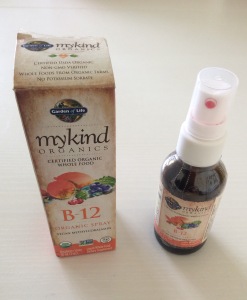
imageSublingual sprays are often preferred to tablets. Global Health Centre recommends VeganSafe B12.

I found it very hard to find an organic B12 supplement and they are very expensive. However, they do last a long time. I had to buy mine from Mykind Organics in the US. I have been taking a weekly spray of 5000 mcg for about 6 months now and my B12 levels are fine. It is raspberry flavoured and very easy to use.

I hope this has helped clarify this issue, it is difficult to be sure of getting the right information when even those trained in this area aren’t even in full agreement!  Watch the short video of a debate on the subject by a panel of experts in nutrition at the end of this article.

Sources: The Vegan Society

Forks Over Knives

Global Healing Centre

Dr Steven Lin

Copyright: Chris McGowan

“a life to which I feel myself a stranger.” -Swiss Long Rider Ella Maillart

A welcome update from Marc on his Long Saunter South through Central and South America, where he raised money and awareness for children in orphanages and special needs schools, and news of Red, his faithful steed!

vaquero's avatarThe Long Saunter South

Several months ago I returned home, to my loving family whom have been there with me every step of this journey. Still, months later it does not feel real. Taking in what happened and feeling out of place in my home town. It can be hard to process the changes that occur, not only within but the advances in the “civilised world” wifi, fingerprint recognition, smart phones, faster connections and no, I am not on snapchat. A lot can change in four years. Life seemed a lot more simple out on the road ….. however, I am not missing the chicken soup.

Lotus-Root-Rice-Bean-and-Chicken-Feet-Soup

Red, my horse, I am reliably informed is doing well, I wake every morning thinking of him, sometimes still disorientated enough that I jump up shouting his name, looking for him. He is safe and healthy with the wonderful family I got to spend time with in Ecuador…

View original post 410 more words

Juicing Accessories I Can’t Do Without!

As a regular juicer for over 2 years, I’ve acquired a few accessories that I wouldn’t want to do without, so I thought I’d write a post about my juicy recommendations. Naturally, there are other brands of similar items available but these are the ones I actually use and which I’ve had for the most part for all of that time.

image

After the juicer and blender, the first thing I bought was a couple of metal juice flasks. These are great at keeping juices fresh in the fridge and help them last longer by keeping them cold and away from light and air, thereby slowing down the oxidising process. Always fill up to the top to prevent air spoiling the juice, adding ice chips helps too. They are good for carrying around so long as you don’t leave them in the car getting warm. This one is from Juicemaster and is the 0.4L size. It also comes in 0.6L  and there is a Sigg equivalent too.

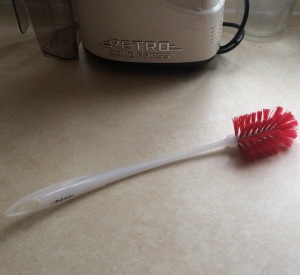
The next thing you need if you are using flasks of any kind is a long-handled flexible brush that will reach right down and clean them out properly. Good hygiene is essential when juicing, all equipment and accessories need to be thoroughly cleaned to prevent the growth of harmful bacteria.

image

Again, this one is from Juicemaster and still going strong after two years. While we’re talking brushes, I’d also say you need a good vegetable scrubbing brush too so you can leave the skin on your veggies.

It is always best to drink your juices through a straw to protect your teeth, but I have a problem with plastic straws: I don’t like ingesting chemicals, plastic is bad for the environment and you have to keep buying them. Instead, I found some stainless steel ones that come as a set of 4 (somehow one has disappeared!) with a tiny spiral brush for cleaning them.

image

They are available on Amazon and currently cost around £4. They can be placed in the dishwasher and sterilised.

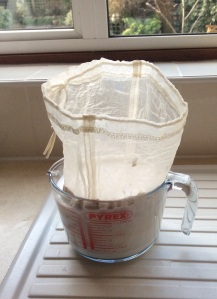
Once we mastered juicing  we moved on to making our own nut milks (see here for Nut Milk, Shake & Smoothie Recipes), and my next must-have accessory is a nut milk bag for straining the milk from the pulp. There are several different kinds and shapes available, I got mine on Amazon. It is easy to rinse through under the tap and hang it by the drawstring to air dry. Always rinse it out straightaway to make sure it is completely clean – don’t let the pulp dry in the bag, it will be so much harder to remove.

image

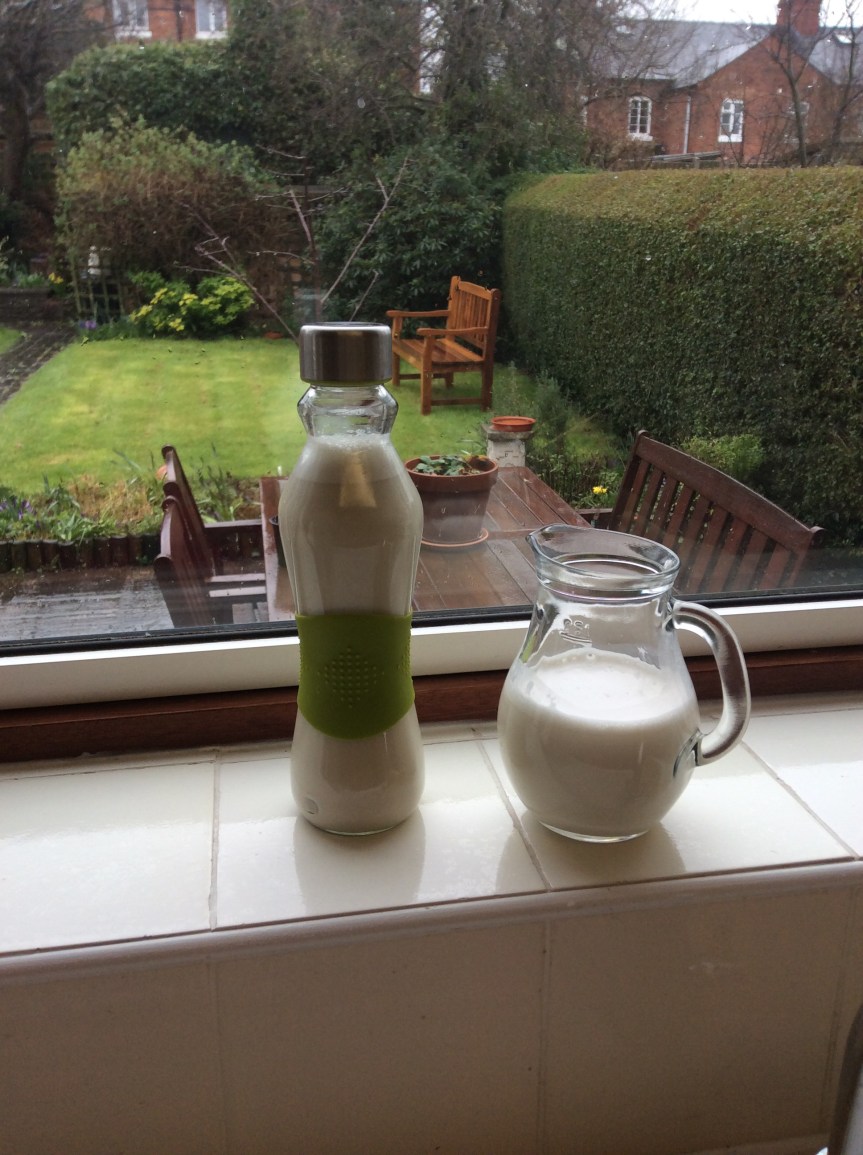
Once we started making nut milk, we needed something to store it in! I prefer glass to plastic and we found a great 500ml glass bottle by Grip & Go on Amazon which, if you’re like me and have a dodgy grip, is so much easier to hold: it has a thinner middle around which is a textured silicone grip. You can get them in many colours and two sizes, they are dishwasher safe apart from the lid and they don’t leak. I originally had a glass jug with a plastic lid, but it was neither airtight nor leakproof so the milk went off quicker and you couldn’t shake it up without getting splashed.

image

I bought 2 x 500ml bottles after finding the 1L bottle too heavy. They fit easily in the fridge door and look good too. The company also do a quirky twisty glass bottle that looks even better for those with grip problems like me. Great for juices too!

Copyright: Chris McGowan

How (and Why) I Kicked the Paper Towel Habit

Pioneering the Simple Life has become my conscience these days! They tell me what I already know (and sometimes what I don’t), but don’t get around to acting upon and then I am forced to confront my insertia and do something about it. Here is a prime example. We as a family are some of the world’s most profligate users of paper kitchen towels and I admit I am mostly to blame. Dishcloths fill me with horror because of all the bacteria and take so much washing and rinsing out; when there’s a spill it’s so much easier to grab kitchen paper and just throw it in the bin. I justified my use by buying recycled amd then composting them after use. I am now rethinking this tactic after reading this post. You should too. And be sure to read about shop receipts too. BPA is toxic and is everywhere – even in our recycled paper products!

Liesl Clark's avatarPioneering The Simple Life

A few good rags,

A few good rags in a basket = alternative to paper towels. Photo © Liesl Clark

A few good rags in a basket = alternative to paper towels. Photo © Liesl Clark

a washing machine,

2-3 weeks-worth of cloth rags in line for laundering = sustainable replacement for paper towels. Photo © Liesl Clark

2-3 weeks-worth of cloth rags in line for laundering = sustainable replacement for paper towels. Photo © Liesl Clark

and an empty drawer

"Wiping Towel Drawer," under the counter right next to the dinner table, ready for wipe-ups. Photo © Liesl Clark

“Wiping Towel Drawer,” under the counter, right next to the dinner table, ready for wipe-ups. Photo © Liesl Clark

are all it took to convert my family from paper towels to cloth towels.

Rosie would be proud of these cloth towels. They’re definitely “the quicker picker upper” vs. Bounty, her paper equivalent.

And there’s another reason to skip paper towels altogether: Bisphenol A, a chemical linked with cancer among other things. Sadly, according to a study published in Environmental Science & Technology, our recycled paper products are now laced with this endocrine disruptor because thermal receipts that have high amounts of BPA…

View original post 430 more words

Sprouting for Health, Energy and the Environment!

Recently I published a recipe for Warming Stir-Fry with Avocado, Alfalfa and Sprouted Beans and was asked where to obtain the beansprouts. Well, the answer is, your kitchen counter!

It so easy to grow your own, takes no time or effort and they provide protein and oodles of more useable nutrients than cooked foods. Enzymes, vitamins, minerals, fibre and essential fatty acids (that burn fat and are usually in short supply in most diets) increase dramatically during the soaking and sprouting process and are more easily absorbed by the body.

Not only are homegrown sprouts good for body and soul (growing your own is a satisfying and life-affirming activity), but they are also good for the environment. Buy organic, untreated seeds, nuts, beans or legumes and you omit nasties: pesticides, additives and other unwanted chemicals. Ready grown sprouts are often treated with chemicals before packaging. (NB You need to buy seeds from a health food shop/supermarket or online eg Amazon etc NOT a gardening shop!)

They are inexpensive, 1 tablespoon of seeds produces several days’ worth of sprouts – depending on how often and how many people eat them! You can rotate the varieties and have your own little sprout garden in your kitchen, producing nutrient-dense plants for your salads, sandwiches and lunch-boxes and the children will enjoy the process of soaking, watering and watching them grow as well as benefiting from the foods themselves.

So, what do you need and how do you do it?

There are 3 methods: the third actually produces microgreens, a stage further on than sprouting and involves soaking seeds and sprinkling them on a tray of organic soil, watering and letting them grow. But we want to produce sprouts, so you need either a sprouting tower like this one:

This thirty-year-old tower has 3 sprouting trays, a lid that is ventilated to allow air to circulate and a bottom tray where the water drains off – if buying new, check it is BPA-free

or large, wide-mouth mason jars with either sprouting lids (available from healthfood stores or online), cheesecloth or muslin and a rubber band to keep it in place.

You can sprout most seeds, nuts, beans or legumes – except kidney beans, they are poisonous if eaten raw.

For either method, the first thing you need to do is wash your hands – hygiene is important, then rinse the seeds and pick out any grit or discoloured or broken ones and soak them overnight in pure water. For 3 trays, you could use 1-2 teaspoons of alfalfa or broccoli seeds between 2 of them and 1-2 tablespoons of mung beans in the third. Use 3 times as much water as seeds. (Broccoli seeds provide many times more nutrients than normal broccoli).

image

(If using jars, you can put them straight into the containers). Next morning, drain them into the trays and rinse again (one type of seed per tray, they all grow at different rates).

Rinse and drain twice a day, pouring away the excess water.

image

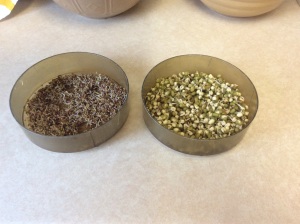
After Day 1, the mung beans have swollen and are beginning to sprout.

For the jars, cover and stand upside down, if possible at a slight angle, and rinse at least twice a day.

The sprouts will grow faster in warmer weather and in exceptionally hot weather may need an extra rinse. Don’t let them dry out but don’t overwater! Be sure to drain off the excess to prevent mould and bacteria developing.

image

After 2 days, they are well on their way. These were growing during a very cold February.

image

3 days and the mung beans are about an inch long and ready to use! The alfalfa needs another couple of days.

image

When you harvest the mung beans, rinse and either store them as they are, covered in the fridge – they will last up to a week or more – or place in a bowl of water, swish them around and the green hulls will float off and can be removed if desired. Some people think they are a little bitter, but of course you will be discarding nutrients too.

The sprouts can be used in salads, sandwiches, with stir-fries or as garnish for warm soups (the less heat the more nutrients you retain).

image

Sprouted seeds, beans, nuts and legumes are highly nutritious and are particularly rich in Vitamins A, B Complex, C and E, but alflafa is also a good source of Calcium, and a very good source of Vitamin K, Folate, Iron, Magnesium, Phosphorus, Zinc, Copper and Manganese.

image

28596240_Unknown

Broccoli Sprouts

You can have a lot of fun with the kids using alfalfa sprouts:

image

There have been comments in the media about the dangers of ecoli in beansprouts. Firstly, I would say commercial enterprises don’t much like us growing our own rather than buying their nutrient-poor, mass-produced products and secondly, providing you keep up your hygiene standards: wash your hands, drain off the soaking water and scrub out the trays/jars, then all should be fine.

We have been growing sprouts for 30 years and neither my family nor friends have had one problem with ecoli.

I hope this helps inspire you to start producing your first beansprouts.

Copyright: Chris McGowan

The Adventures of Blue Bear

Your heart will melt watching and listening to this 3 year old American boy trekking with his Blue Bear in Nepal, learning about life in the Himalayas, making friends, cooking, carrying water, and helping his family set up children’s libraries in rural communities. He is learning and experiencing real life, a gift more valuable than images from a tv screen or tablet.

Liesl Clark's avatarPioneering The Simple Life

DSC_0723 Photo © Liesl Clark

There once was a time, not too long ago, when our children were very small but what some might call brave. They ventured (as they still do) each year to the other side of the planet, to the Himalayas, and those first years were precious because they didn’t know they were doing something special.

DSC_0566 Photo © Liesl Clark

They thought everyone travelled to the base of Mount Everest to live the good life.

DSC_0700_DL.png

Their years spent over the winter months with our Sherpa family, Ang Temba and Yangin, in the village of Khunde at 12,600 feet, are among the happiest months of our lives. We had no distractions, committing our time to the children’s well-being up there, enjoying the simple pleasures of family company and the rhythms of Himalayan winter life. The life lessons the village taught us over the years are the reason why we’ve created this blog.

Finn Yakboy Photo © Liesl Clark

One…

View original post 285 more words

Spiralising: A Great Way to Get Your Kids to Eat Their Greens, Reds, Yellows …

I have a confession to make. You know all those kitchen gadgets I mentioned in Gadgets Anonymous ? Well… <typing in quiet voice, head down, eyes looking sheepish> I have another one… But it’s not a blender!

Nope, a spiraliser. Lurch is its name.

To be fair, it isn’t new. It’s been sitting in the cupboard for some time, still in its box, waiting for us to catch up to it. And last night, we finally did, amd what fun!

image

On this plate are a Red Apple, a Carrot, half a medium Courgette and a quarter of a long Cucumber. Look at the wonderful colours!

It is highly unlikely anyone would sit and eat those items whole with a knife and fork. But spiralised, it becomes a whole different experience. Spiralising really does make a difference to how they taste, the texture and how much you can eat.

I had all this for dinner last night, along with a couple of very tasty, easy-to-make items from Jason Vale’s Super Fast Food app, which I hope to review when we’ve given it a good workout – so far, so thumbs up!

(We made the Zesty Creamy Rocket Pesto and the Nutty Seeded Crackers, both flavourful and nourishing and now added to our menu for regular use).

image

For the kids, it’s so much fun watching the twirly ribbons of veggie noodles emerging from the spiraliser, they just want to take a handful, tip their head back and start feeding the spirals into their mouth.

The Lurch spiraliser is very light and easy to use. Kids can help make their noodles with supervision. It comes with 3 different blades which are stored in the side and have protective hand grips to make it easy to switch.

image

It has suction feet to stop it slipping or travelling while in use. It also cores, and kids find the leftover middles amusing to play with or eat, or they can be juiced.

I am so excited! I know I am late to the party as far as spiralising is concerned, but I’ve been wanting to try for so long and better late than never!

Just hope the juicers and blenders aren’t going to view this as an act of betrayal! (But they needn’t worry, they continue to have pride of place on the kitchen counter, the spiraliser for the moment is still confined to the cupboard).

With grateful thanks to K and M! x

Copyright: Chris McGowan

Creativity is Contagious – Pass It On!*

image

Thank you, timelesswheel for nominating me for this award, I am a little taken aback as I am a blogging novice and I feel I am still serving my apprenticeship! It did, however, inspire me to write a post on creativity and health:

Creativity is a basic human instinct, a need. We all need to express ourselves and if we repress this instinct or we are not given the physical or emotional space to do so, we can become withdrawn, resentful, introverted, insular, develop disease or depression, become frustrated and even angry, often hurting those close to us.

If we are not creative how do we progress as a society?

Being creative doesn’t mean you have to be an artistic or writing genius or require other people’s approval for your efforts. Doodling is being creative! Making a meal is being creative. Constructing medieval weapons or a castle out of cardboard for your grandchildren is being creative!

image

image

One blogger, scribbleartie, makes lovely whimsical images out of ink blots and soap bubbles, she is still working on her technique and loves having fun experimenting. She also takes everday items that have been discarded and turns them into works of art.

image

My son-in-law gets great pleasure from stacking logs and has recently studied Norwegian methods of creating different shapes out of these stacks from a book he was given for Christmas.

My husband, who was never interested in food, cooking or nutrition, now spends Sunday mornings communing with bread dough.

I like to make cards and paint rocks, you can read how to in these posts: Monday Meditation: Mindfulness and Rock Painting & How To Paint Christmas Card (or any) Rocks & Taking A Break

My first efforts were nothing to write home about at all, but as with anything, the more you do it, the better you get. The benefits to your wellbeing of mindfulness, of being completely in the moment, having fun through being creative, are many and varied, from increased self-esteem to a strengthened immune system and improved mental health.

Watch a child unihibitedly splashing paint on a large sheet of paper: she doesn’t ask what colour she should use or what shape she should make, she doesn’t feel she has to keep within the margins or hold her brush a certain way – heck, she doesn’t always even use a brush, her fingers and toes will do!

Go on, free your mind, let it wander where it will, pick up a pen and write a silly story or poem for your children, or even a letter the old-fashioned way; or grab a pencil and sketch the cat or the dog – it can be a cartoon or as surreal as you like; find a pair of scissors, some images or card and some glue; grow some plants or vegetables; look at the clouds or the embers in the fire and see what shapes are developing, what thoughts and images do they conjure up? Arrange some garden flowers or twigs in a vase. Pick up your camera, go for a walk. Build a bike from recycled parts. Meditate, find your inner creator.

Take a leaf out of timelesswheel’s book, she had no idea why she wanted to write a blog or what she wanted to say. She just started writing and is still finding her voice and her creative eye in her photographs. And we are enjoying watching her do it.

Give it a try. Express yourself. You will be so much happier and healthier for it.😊

Now *I* have to get creative and come up with 5 things about myself:

  1. I have pens, pencils, paper, scissors, glue in every room I or visiting children use
  2. When I can’t sleep, I create new recipes for juices, smoothies or raw treats
  3. I love watching children playing, talking to themselves and being completely focused on what they are doing or being
  4. At school, I was no good at art, sewing or knitting nor did I ever have a cookery lesson, yet these became my main pastimes in adult life.
  5. I think maybe I should buy shares in Caran d’Ache! Their watercolour pencils are so soft and have such depth of colour, I can predict a growth in their future sales!

Here is my list of recommendations for creative blogs that I hope will inspire:

Thethomastimes – encouraging children to be creative

Watching the Daisies

BrewNSpew

http://spiritualfoodie.org

http://katyhadalittlefarm.com

Storyville

http://susanrushton.net – beautiful photography

About

*Albert Einstein

 Copyright: Chris McGowan
Versatile Blogger Award!

Thank you to the kind scribbleartie for nominating my blog for this award! Her blog is all about crafting trash into treasure and she does some lovely delicate and whimsical ink blot paintings too, have a look!

In accepting this award, I am tasked with listing 7 things about myself and nominating other bloggers whom I judge write with integrity and on a variety of topics.

So, the hard part, 7 things about myself:

  1. After being vegetarian for 39 years and after a few attempts during that time, I became vegan a year ago.
  2. I once worked at Woolworths, mostly on the cosmetics counter, but sliced my finger on the bacon slicer when standing in for someone else. (And people wonder why I’m vegan!)
  3. I gained a First Class Honours Degree with The Open University in my early 40s. An amazing ‘University of the Air’ founded by the Labour Government of Harold Wilson in the 1960s.
  4. My husband and I spent our first date looking for my contact lens!
  5. I once saw Paul McCartney and Wings for 50p when they turned up unannounced at uni and asked if they could play their first songs. They played their single ‘Give Ireland Back to the Irish’ several times. It was banned by the BBC.
  6. My dad’s first car was a black Morris Minor 1000. I have no idea how we got 2 adults, 4 kids and a dog in it!
  7.  Our first car was a green Morris Minor 1000 and our current car is also a green Morris Minor 1000 but not the same one, we had a blue one in-between!

Now to the blogs I recommend:

Pioneering the Simple Life is the most inspiring blog I’ve read. Posts and tips about living sustainably, about their experiences in Nepal and building an underground network of individuals to provide and transport vital supplies to villagers following the devastating earthquake there.

Organic Guinea Pig blogs about physical and mental health, providing recipes and lifestyle advice as well as having a Pet Therapy business working in schools, pyschiatric units, care homes and so on.

From Pyrenees to Pennines is a lovely gentle blog of posts and photos about the English countryside (and weather!), historic places to visit – including continental towns – as well as musings on geneaology and other everyday topics.

Itching for Hitching I have never been caravanning nor ever had a desire to do so, too claustrophobic for me, but this Australian blog makes me smile every time I read it.

Mandy’s Running Blog illustrates that life doesn’t have to start slowing down once you reach 50! Far from taking things easy, Mandy has become an ultra runner mainly up the hills of Vancouver, Canada!

Natural Juice Junkie Neil Martin writes a very informative but acessible blog on all things to do with health, nutrition, juicing, motivation, lifestyle coaching.

The Vegan Family blog recipes and beautiful photos from the woods in Aberdeenshire, Scotland

Our Green Nation is a group of individuals who pool their expertise to help empower us to make decisions on health and lifestyle with informative, factual posts on education, environment, food regulations, the role of Big Pharma and Agriculture, sustainable living, recipes etc., plus posts on mindfulness, thought for the day and so on. A great read. I learn something every day.

Cooking Without Limits has wonderfully simple vegan recipes, try her Raw Vegan Cheesecake all done in the blender.

That’s as many as I can manage. Apologies to other bloggers that I follow, I have tried to include blogs you may not already be aware of.

Copyright: Chris McGowan

Super-Juicing: Day 13, Does It Have To End? Plus Tips on Preparing for a Juice Programme

image

Here we are, the penultimate day of my Super Juice Fortnight and I don’t want it to end! I am loving the Sweet ‘n’ Smooth Veggie Blend for breakfast (see Jason Vale’s Super Juice Me! Plan*), despite the ever-present parsnip in the list of ingredients – and of course it was very swiftly replaced by a sweet potato!

It’s become so much of a routine now that my husband’s cooking no longer bothers me – not even the melted cheese! (see Super Juicing Day 6: Melted Cheese and Spicy Teacakes).

I am so full of energy and have been very productive, writing new blog posts and recipes, editing old ones, making cards and participating in a Blogging 101 course.

None of the usual January slump.

My brain is firing on all cylinders, I’ve made decisions I’ve been putting off for ages, I am bursting with ideas for writing – my body can’t keep up!

Many people find January a difficult month to do a juice cleanse due to the drop in temperatures, others find it an ideal time after all the Christmas over-indulgence, when they are full of New Year resolve.

Spring isn’t too far away – I have crocuses out already in the third week of January and daffodil buds that have been bursting to open for a couple of weeks now – so if you didn’t manage to join in the January Juicing, but have seen the stunning results achieved by others who have:

Why not plan to do it in February or March?

Here are some tips on how to begin:

  1.   Begin by reducing your intake of processed foods, sugar, coffee and alcohol while adding fresh veg and fruit. This will reduce any withdrawal symptoms you might experience in your first few days of a juice cleanse.
  2. At the same time as you are preparing yourself physically, prepare yourself mentally by reading a book or watching a film about juicing and how to go about it.*
  3. Make sure you use a nutritionally-balanced plan.
  4. Buy the best juicer and blender you can afford. Seek the advice of regular juicers, read my reviews and those of other bloggers/consumer sites. If you’re reluctant to splash out until you’ve given it a try, you can often find secondhand juicers at car boot sales and on eBay.
  5. Introduce one juice a day to get into the habit and get used to the preparation, timing and consuming of it.
  6. Find a good local source of organic fruit and veg if possible
  7. There will always be people around you who are sceptical, arm yourself with the knowledge you need to commit to your goal, don’t try to engage them, let them see your results.
  8. If possible, recruit some like-minded friends, or find support online, there are Facebook juicing groups and lots of juicers on Twitter who will provide support and advice.
  9. See your doctor before embarking on a cleanse, have your BP, cholesterol, blood sugar and so on tested, then again later on.
  10. Don’t just weigh yourself, take your measurements too. It is usually these that are the most startling if you need to drop a size or two.
  11. You don’t need to juice just to lose weight. Do it for your health!

You will be so pleased with the improved condition of your skin and your hair, your eyes will shine again, you will have more energy, feel more alert. Many people experience improvements in aches and pains and chronic conditions, including Type 2 diabetes, as well as more balanced hormones and a resetting of your taste buds!

You will discover which foods irritate your digestive system, produce mucous, make you feel tired and which make you feel more alive.

You will be flooding your system with all the nutrients it needs and it will thank you for it!

NB You don’t need to do a cleanse to beenfit from juicing, just adding one green juice a day will make a difference to your health and sense of well-being.

I have one more day of my Super Juicing and I am so looking forward to the shakes for tonight and tomorrow night’s meal – they both have home-made almond milk in them (see Nut Milks, Shakes and Smoothie Recipes). Yum!

*http://www.juicemaster.com for Jason Vale’s Juicing Plans

You can watch Super Juice Me! The Documentary free on YouTube here:

*Joe Cross’s website also has juicing plans and resources while his film Fat, Sick and Nearly Dead is another inspirational tool when considering juicing.

http://www.rebootwithjoe.com

Copyright: Chris McGowan