Oh-So-Chocolatey Hemp Seed Coins

image

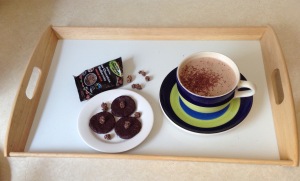
Chocolatey Hemp Coins with Spicy Raw Hot Chocolate and The Raw Chocolate Company Chocolate Mulberries*

This recipe is for all of you chocolate fiends who don’t have a particularly sweet tooth but crave a chocolatey something mid-afternoon. They do have a small amount of raw coconut palm sugar in them but as it is low GI and unrefined it doesn’t produce the same sugar rush or have that tooth-rotting sweetness of refined white sugar. They are easy to make, involve no cooking and are full of raw energy, but be warned, less is definitely more! I can only manage 2!

These are a good protein pick-me-up containing hemp seeds and sweet apricot kernels (like mini almonds).

The only possible track to jig along to while making these is Choco Choco Latte, so you can sing your heart out and expend some of that Raw Chocolate energy!

Here goes:

Ingredients:

1/4 Cup Shelled Hemp Seeds*

1/4 Cup Sweet Apricot Kernels*

1/4 Cup Cacao Powder*

1/4 Cup Raisins

3 Tsps Coconut Palm Sugar*

1/4 Tsp Cinnamon

Approx 2 Tbsps Apple Juice

Raw Chocolate Mulberries Snack Pack*

Method

Put the Hemp Seeds and Sweet Apricot Kernels in the food processor and grind them finely.

Add the rest of the dry ingredients and mix well, adding a little apple juice at a time until the mixture is just moist enough to come together but not too wet.

Take small amounts of the mixture and form into little balls then flatten out into coins on some greaseproof paper.

Press a Raw Chocolate Mulberry into the centre of each coin and place in the fridge for a short time to firm up.

What you do with the leftover Raw Chocolate Mulberries is entirely up to you – but I won’t tell if you don’t.

*http://www.therawchocolatecompany.com/

Copyright: Chris McGowan

Khaki Kiwi Coconut Smoothie!

This smoothie turned out a bit differently from how I’d envisaged, on one of those mornings when things don’t quite go to plan – read more about it in One of Those Days …

The bananas were still very green, despite having been on the windowsill for three days, so I decided to use avocado, kiwi fruit and some cocount milk left over from the previous night’s curry.  Some romaine lettuce and a little wheatgrass powder, would, I thought produce a vivid green smoothie vibrant with health and nutrition, begging to awaken my sleep-starved body. What could go wrong?

This happened:

image

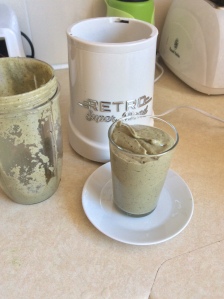
I got a little carried away, adding blueberries and açaì powder. It came out khaki and looked less than appetising! And so thick I could probably use a knife and fork to eat it!

It tasted much better than it looked, however – the ugly duckling turned out to be more like a swan, so smooth as it glided down my throat – so let’s start again and pretend I knew what I was doing!

image

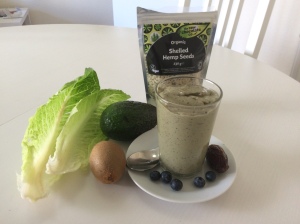
This brunch in a glass is brimming with antioxidants, minerals, protein and healthy fats. It came out very thick, so you may want to add more liquid.

Ingredients

Half a ripe Avocado

(you can freeze the other half if you remove the skin and stone and chop it up, useful for smoothies or guacamole). 

1 Kiwi fruit, peeled

2 large Romaine leaves, washed and chopped

1 Tbsp chopped Sweet Apricot Kernels* (you can use almonds)

2 Tbsps Shelled Hemp Seeds*

2 Tbsps Coconut Milk

1  or 2 pitted Medjool Dates

Handful of Blueberries

1 Tbsp Açaì Powder *

1 Tsp Wheatgrass Powder

Glass of fresh Apple Juice + a little filtered water

Blend and eat with a spoon – or a knife and fork!

The only video that could possibly illustrate this recipe is the great Danny Kaye’s The Ugly Duckling, however it’s been removed from YouTube due to copyright issues 😕

*http://www.therawchocolatecompany.com/

Copyright: Chris McGowan

Earth Day Comp: Win Stylish Grip & Go Glass Bottles & Let’s Ditch the Plastic!

[ Thank you for visiting, this competition is now closed, but please do read the post anyway…]

Today is Earth Day and to celebrate our amazing planet, I am holding a competition to win a generous giveaway of 2 prizes of not one, not two, but THREE Grip and Go glass bottles! And that’s not all…

Many of you have admired my Grip and Go bottles that I use for storing nut milk and now you have a chance to win your own, thanks to their kind donation of some fabulously stylish bottles – plus an added extra…

But first, there’s a condition:

You have to Read ‘The Science Bit’!

We have all seen the warnings in the media about the piles of plastic clogging up our oceans, littering our hedgerows and harming wildlife. We read the articles and watch the news heralding predictions that there will be more plastic than fish in our seas by 2050 – whilst sipping from our plastic water bottles, popping the plastic takeaway box in the microwave and wrapping leftovers in clingfilm.

It is hard to contemplate a world without plastic, we have grown so used to it in every aspect of our daily lives.

But its production and disposal is choking our planet and harming our health, with chemicals leaching into our food and water, potentially causing cancer, hormone disruption and asthma in children.

Plastic water bottles are a huge contributor to these problems.

💧💧💧💧💧💧

Warm Weather and Plastic Water Bottles

How many of us carry plastic water bottles in the car and leave them there in the sun, often for several days?

Chemicals from the plastic are slowly leaching into the water as the plastic warms up:

  • Antimony (causes chronic health conditions, including diarrhoea, vomiting and stomach ulcers)
  • Bromine (causes irritation to skin and mucous membranes)
  • Endocrine Disrupters affecting hormones, thyroid function etc.
  • Cancer-causing agents 
  • Phthalates used as plastic softeners, associated with asthma in children.

Those plastic bottles will already be old by the time you buy them, having travelled halfway around the globe before you put them in your supermarket trolley, transport them in your warm car and store them in your warm home.

Some well-documented statistics about plastic bottles:

  • In the US, 50 Billion plastic bottles are bought every year and 80% of them end up in landfill.
  • More than 60 Million plastic bottles are thrown away every day in the US alone.
  • Just 1 plastic bottle takes 450 years to completely break down – that’s 25 generations!
  • 17 million barrels of oil are used every year in their production.
  • Bottled water costs 1,000 times more than tap water.

  • In the UK, as of 2007, an estimated 13 Billion plastic bottles of water were sold of which only 3 Billion were recycled.
  • The UK consumes 3 Billion litres of bottled water per year.
  • Despite the UK bottled water industry using increasing amounts of recycled plastic, it still creates a huge waste problem from discarded bottles which litter our hedgerows, streets and streams and often end up in the sea via our rivers.

  • 1 refuse truck worth of plastic is dumped into the sea every minute and it is getting worse.
  • The Eastern Garbage Patch is an area of ocean 6 times the size of England and is the world’s largest refuse dump.

  • Last year, a report by The Ellen MacArthur Foundation announced that by 2050 there will likely be more plastic than fish in the sea.
  • Their research found more than 5 Trillion pieces of plastic floating in the seas, many just 5 mm across making it easy for sea life to ingest.
  • Toxic chemicals leached from the plastic when it breaks down may be ingested by sea life and end up in the human food chain.

Here’s one solution:

Reuseable Glass Bottles!

Grip and Go have very generously supplied 6 of their stylish, leakproof, dishwasher-safe glass bottles as prizes in our competition.

350 mls.                    500 mls.                        1 Litre.

There will be two prizes of three bottles each, one prize to be won on Facebook, one on Twitter. You can even choose the colours!

But that’s not all!

In addition to the bottles, there will also be two Double-walled Insulated Travel Mugs, one to go with each prize.

image

This is a fantastic prize.

All you have to do is Like and Follow Grip & Go on Facebook and/or Twitter (@gripandgouk) for a chance to win these gorgeous bottles.

The competition will run from Mid-day Friday, 22nd April, 2016 and end at Midnight on Friday, 29th April, 2016.

Winners will be chosen at random.

(NB Apologies to all non-UK residents: due to the nature and weight of the prize, unfortunately this competition is only open to UK-based followers).

Just click on the link below to go to their web site, have a look at the bottles and travel mugs, decide which colours you’d like, click on their Twitter and Facebook links, Like And Follow using #earthdaycomp.

Like and Follow. #earthdaycomp. Easy-Peasy!

Good Luck!

Grip and Go

Twitter: @gripandgouk

Grip and Go Facebook link

Sources:

 Treehugger

Ban the Bottle

The Ellen MacArthur Foundation

The Guardian

Io9 We Come From The Future

Copyright: Chris McGowan

Earth Day: Microbeads – What Are They Good For…? (Includes Products That Dont Use Them).

…Absolutely Nothing!

(For Earth Day, I am republishing this post from last year, the Prime Minister may have left, but the issue remains.)

More than a quarter of a million people have signed a petition organised by Greenpeace, The Environmental Investigation Agency, the Marine Conservation Society and Fauna and Flora International calling on UK Prime Minister, David Cameron, to introduce a ban on the use of microbeads.

Barack Obama has banned them in the US, they are banned in Canada and many other countries are discussing a ban.

What are Microbeads?

Microbeads are tiny beads of plastic used in the manufacture of many toiletries and cosmetics. They act as exfoliants in products like toothpaste, facial cleansers, soaps and body scrubs, cleaning products.

Why should they be banned?

Tiny plastic microbeads can’t be filtered out by our sewage system and they end up in our rivers, lakes, seas and oceans. They are a massively polluting substance. Because they are so tiny, they become ingested by all kinds of sea life: birds, whales, turtles, fish, plankton, bivalves and so on. Most birds studied have been found to have microbeads in their stomachs.

Not only do they harm the species that swallow them but they can harm us too, for example when we use toothpaste and eat fish. Some end up in our soil via fertilisers.

8 Billion tonnes of plastic are disposed of in the oceans every year, do we really need plastic microbeads adding to the problem?

There are many more ethical and natural alternatives for example, seeds, cellulose, nut kernels, sugar, oatmeal and salt.

Many organisations and companies are calling for microbeads to be banned, some have agreed to phase them out, others have stopped using them. According to Greenpeace, Asda, Boots, Avon, L’Oreal, Clarins and Bodyshop have all pledged not to use microbeads in their own products. Other companies have made statements announcing the phasing out of microbeads from their products: Proctor and Gamble, Unilever.

The Co-Operative doesn’t use them at all.

image

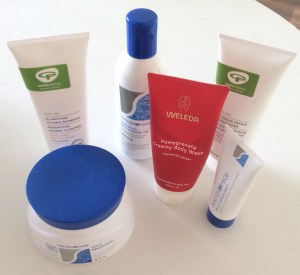
My personal favourite, Dead Sea Magik products don’t contain microbeads or other nasties, are vegan, moisturising, gently exfoliating and you only need a tiny amount so they last a long time too.

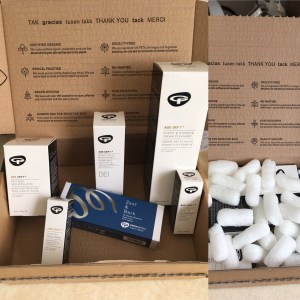
1F6AFEA3-1A9C-4422-973E-2492968884EFGreen People organic products have won over 100 awards and are free from microbeads. Most of their products are vegan. Again, a tiny amount is needed, so although they may seem expensive, they last for ages.

They also use recyled and recyclable packaging.

Weleda use natural ingredients, working in harmony with nature, with no petrochemical derivatives, and many of their products are vegan.

We can all help by signing the Greenpeace Petition and by buying our toiletries and cosmetics from companies that don’t use microbeads – or make our own! There are many sites that have recipes for DIY cleansers, exfoliators and moisturisers using coconut oil, avocado and so on.

 Sources:

Greenpeace

Beat the Microbead

Plastic Free Seas

Copyright: Chris McGowan

Water: They Can’t Get Enough, But We Can Help!

Recently, while I was thinking of writing a post on hydration, there was a sudden deluge (pardon the pun) of articles and tweets on the subject. Everywhere I looked, someone was urging that I drink more water. I thought to myself, If I drink any more, I’ll float away! But as I sipped my regular morning hot water and lemon and then had a shower and washed my hair, cleaned my teeth and flushed the loo, I started musing on how much we take our clean water supply for granted and how much we complain about the incessant rain.

Have you ever experienced a drought, even temporarily? I have.

Have you ever had to use a stand pipe down the street in one of the hottest summers on record and queue up for a restricted amount of water, carry heavy containers home, ration it out, use the same washing water for all the family, then use it to flush the toilet that has had to be used several times without? I have.

Have you had to do this with a toddler still in nappies – cloth ones that needed sterilising? Or with a baby using feeding bottles? I have. Have you ever been heavily pregnant during a hot summer and had the water go off because of a burst pipe, making it necessary to walk a couple of streets away to the nearest public toilet for a day and a night? I have. During that hottest summer, I was also coping with a slipped disc.

It was indescribably difficult.

Yet our difficulties and inconveniences (pun intended) were nothing compared to those endured week in week out, by millions of families in developing countries where mainly wives, mothers, sisters and daughters spend hours every day walking miles to collect water that is often contaminated with bacteria, parasites and disease, for example E. Coli, Cholera and Hepatitis A.

Between 600 and 700 million people have no clean drinking water, while over 2 billion do not have access to toilet facilities.

image

Image from Jerry Bottles

While I was contemplating this, tweets began appearing on my timeline about Matt Damon and Gary White’s charity Water.org and the British organisation, Water Aid UK. Then purely by chance, someone called @jerrybottles liked one of my tweets. I looked them up. While I did so, two other companies showed up: Conscious Step and Three Avocados.

These companies have one thing in common: they are non-profit businesses that sell unique products to raise money for clean water projects around the world.

100% of their net profits go to these projects.

This all seemed serendipitous and I decided to promote their organisations via my blog. If one person buys one item after reading this, then I will feel like I’ve done something worthwhile.

These companies sell very different quality products and I want to point out that I haven’t been given any to promote, nor have I purchased or used any of them. Purely and simply, I looked at their web sites and products, read their missions and wanted to help in this small way.

First up is Jerry Bottles

image

Leicester-based businessman, Harun Master, set up his charity in 2011 to help fund and co-ordinate clean water schemes in India and Africa. Their stainless steel bottles – named after the large jerry cans used by women to collect their water – are stylish, dishwasher safe and sustainably produced. Along with Tobias Gould and Taj Bharma, he built a company whose mission is to educate about pollution caused by plastic bottles, encourage the use of refillable steel bottles and use the profits to provide safe, clean water – starting in Tanzania. As a bonus, the co-ordinates of each project will be printed on the base of the bottles so you can see where the proceeds from your purchase have been put to use. They keep costs and staffing low to maximise the funds available for the schemes.

image

They are also working with local shops and businesses to build a scheme whereby you can refill your Jerry water bottle for free when out and about. They aim to add to their range by working with designers to create additional quality bottles and accessories. The web site is informing and fun, as are their tweets!

Three Avocados is the fascinating name of a coffee company in St Louis, Missouri, founded by Joe Koenig in 2010 after a trip to Uganda. The poverty surrounding him inspired him to set up a company which sells 100% Arabica coffee – produced by small farmers in Uganda and Nicaragua for fair prices – and donates all its net profits to clean water projects worldwide. One of their partners is a women’s co-op which uses the money earned from growing coffee to send their children to school.

image

In Uganda alone, without clean water, 63 children die every day. Since the company started, over 20,000 people have benefited.

image

Women and girls are usually the ones who walk miles every day to collect large jerry cans of contaminated water. They are unable to work or attend school. They are at risk of assault. Providing clean water allows them to gain an education and employment as well supporting a healthier community.

image

Oh, and why is a coffee company called Three Avocados? Well, visit the web site and read their story – just have some tissues handy when you do.

Conscious Step is the brainchild of 3 like-minded men: Hassan Ahmad, Adam Long and Prashant Mehta, left their respective careers at the World Health Organisation, Engineers Without Borders and in Microfinance, and came up with the quirky idea of selling uniquely designed and manufactured Socks for Causes,  to combat Hunger and HIV/Aids, promote Education and provide Clean Water.

image

In partnership with Water.org net profits from these blue Argyle socks provide clean water for one person for 18 months!

image

(Images from Conscious Step)

The socks are certified Fair Trade and are made from organic cotton using non-toxic dyes.

I asked in my previous post ‘ What Colour’s Your Wee?! Water: Part 1 – Are You Getting Enough? Well, for some, this question is moot. They can’t get enough. What they can get is more often than not a long trek away and unsafe to drink.

You can help change that.

Copyright: Chris McGowan

What Colour’s Your Wee?! Water: Part 1 – Are You Hydrated?

(Spoiler alert: We are talking water, wee and whoopsies!)

Whenever my 85 year old mum comes to visit, I am struck by… Oops, sorry, Mum… I’d better quickly explain that no, I am not going to be discussing the colour of my mum’s wee!!

Let’s start again:

Whenever my 85 year old mum comes to visit, I am struck by her antipathy towards drinking plain, unadulterated water. The only water that passes her lips is a sip to wash down her medication. She only ever drinks coffee throughout the day and a glass of wine with dinner. Very rarely, in hot weather, she drinks a glass of orange squash.  I can’t persuade her even to finish the glass of water when she has her tablets. Yet, a lot of the time she is tired, confused and has difficulty walking due to problems with her leg muscles. These are just three of the typical symptoms of dehydration.

Dehydration in the elderly is of particular concern as symptoms can be mistaken for those of dementia, and they are often given yet more drugs to help counter its effects and slow its progression.

But it is not only the elderly who risk becoming dehydrated. As we (hopefully) approach Summer, we all could do with assessing our intake of such a vital substance as we become more active, expelling more breath and perspiring more in the (slight intake of breath) warmer temperatures. (One can but hope!)

Water makes up about 60% of our bodies and is essential in lubricating our joints, spinal discs and chord, transporting nutrients, and expelling waste products and toxins; it regulates our temperature and keeps the tissues in our ears, nose and throat moist. Water helps keep your blood thin and your Blood Pressure down and flushes away unwanted fats. We need to keep hydrated to keep healthy.

image

How do we know when we are dehydrated?

There are lots of signs that you are not taking in enough fluid:

  1. Constipation
  2.  Brain fog, feeling unfocused
  3. Confusion
  4. Headache
  5. Dizziness
  6. Muscle fatigue
  7. General fatigue
  8. Dry mouth
  9. Drowsiness
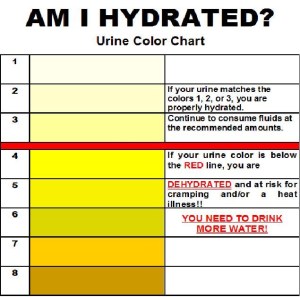
  10. Dark or strong-smelling urine: if you are well-hydrated, it should be straw-coloured.
  11. Stiff joints, disc problems
  12. In children, they are less active than usual
  13. Drinking too much coffee and/or alcohol  – they are diuretics

Many experts think that if you wait until you are thirsty, you are already dehydrated. They advise drinking small amounts of water throughout the day.

Drinking large amounts of water infrequently can put your body under stress.

Carrying a water bottle helps. Preferably not plastic.

image

(See Jerry Stainless Steel Bottles, a non-profit company supporting clean water projects in India and Africa).

image

Image courtesy of Jerry Bottles

(Colour may be affected by medication or Vitamin supplements – 1 person I know had a shock after taking a Vitamin B supplement!)

How Much Water is Enough?

The European Food Authority recommends 2.5 litres of total fluid per day for men and 2.0 litres for women, whilst the US Institute of Medicine recommends 3 litres (13 Cups) for men and 2.2 litres (9 Cups) for women. These amounts can vary according to health, weight, intensity of activity and where you live, temperature and so on.

70-80% should come from fluids and 20-30% from foods.

Children need 6-8 glasses of fluid over and above what they access from food, with younger children needing smaller drinks of 150ml size.

A general guide is to take your weight in pounds, divide by 2 and that is your amount of fluid required in fluid ounces.

Getting children to drink water can be really hard. Adding a slice of fruit or a strawberry may help. Starting them off as babies is perhaps the best policy and if they see you drinking water regularly, they will soon adopt the habit. Schools could do more to ensure children have the opportunity to drink throughout the school day, they would see results in the classroom in terms of concentration and energy. Parents can also ensure they take sugar-free drinks in their lunchboxes as well as hydrating foods.

All of us can benefit from eating more hydrating foods. Cucumber is well-known for its hydrating properties  (I juice it every day), but also celery, carrot, tomatoes, beets, fruits and salads. Most whole fruits and vegetables are made up of 80-90% water and go a long way to helping us keep up our fluid intake as well as giving us all their essential nutrients.

image

Your skin will benefit from all the extra fluid, vitamins, minerals and healthy oils while your eyes will be sparkly bright! Your brain will function better, you’ll feel more alert and focused. You may also get relief from some of the aches and pains in your joints and muscles.

Having trouble with your weight? Keeping up your fluid intake helps keep your weight in check: your body often interprets extreme thirst as hunger and so you eat more. If you ignore normal signs of dehydration, your body thinks, well if she’s not going to give me any actual fluid, I’ll have to get it the hard way – through food. And so you eat, and snack, until it gets what it needs.

If you don’t drink enough, you become constipated and your body reabsorbs fluid (and thereby toxins) from your stools. Now there’s a pleasant image!

I find cold water difficult to drink, so I prefer it out of the kettle. Hot water with a slice of wax-free lemon first thing in the morning is a great start to the day, it rehydrates, wakes up the liver and kick-starts the metabolism.

image

I also drink a variety of teas: green tea with jasmine; licorice and cinnamon; lemon and ginger; chamomile and some fruit teas.

There are lots of interesting and flavoursome ways to increase your fluid intake and nurture your body.

We in the developed world are fortunate that hydration for optimum health is pretty much our main concern when it comes to water intake – give or take the odd chemical spill. There are millions of others who struggle to get enough clean water just to survive. We literally have it on tap, so let’s use it to keep ourselves and our families hydrated and healthy.

By the way, what colour is your wee?

(Watch out for the beetroot!)

This is Part 1 of 2 posts on water. Part 2 is about 3 socially responsible businesses who donate all their profits to clean water projects in developing countries. Please read and see if you can support their efforts.

Water: Part 2 – They Can’t Get Enough

N.B. If you are at all concerned about dark-coloured urine or any of the other symptoms listed, please see you doctor.

Copyright: Chris McGowan

Magnesium: Are You Getting Enough?

Do you remember those old adverts for Milk of Magnesia, sold in attractive cobalt blue glass bottles? It was sold as a remedy for indigestion and constipation.  Indigestion is a common complaint these days and is just one of many symptoms of magnesium deficiency – along with constipation – a deficiency that can occur through consuming a highly processed diet based on refined flours and sugars. This happens in two ways: firstly, the refining process strips the whole foods of their magnesium content and secondly, magnesium is stripped from the body in having to process all those refined foods.

Do you also recall the age-old advice to have a drink of hot milk at bedtime to help you sleep? Milk is one source of Magnesium, an essential mineral which helps your muscles relax and therefore helps promote a good night’s sleep. (There are many plant-based sources too and I’ll provide a list below and see also my Magnesium-Rich Hippy Hippy Shake).

Did you know low levels of magnesium can be a contributory factor in mild depression?  A couple of handfuls of cashew nuts is said to have the equivalent effect of one dose of Prozac on mood and mild depression due to the high levels of magnesium, tryptophan and B6? (This is the subject of some debate, please do not stop taking medication without consulting your doctor).

image

So, Could You Be Deficient?

Many people are considered to be deficient in magnesium and you may be too even if you consider that you eat reasonably healthily. Our soils are more depleted of natural magnesium nowadays and we often lead both physically and psychologically stressed lives – stress being a major factor in magnesium depletion in the body.

We drink more caffeine and phosphates in fizzy drinks which both increase excretion of magnesium and bind to it, which prevents absorption of this important mineral.

Certain medications increase excretion of magnesium via the kidneys, for example, diuretics, heart and asthma medications and birth control pills, while alcohol is also a diuretic.

People over 55 years old tend to eat less and have less efficient digestive systems, so they may be particularly prone to deficiency.

Symptoms of Magnesium Deficiency include:

Muscle cramps, Poor Sleep, Anxiety, Fibromyalgia, Headaches and Migraines, IBS, Irritability, Palpitations, Chronic Pain, Chronic Fatigue, Acid Reflux, Constipation, Bloating.

Magnesium deficiency is considered a major factor in causing Chronic Inflammation, believed to be the cause of many of today’s chronic conditions. Magnesium also aids bone health as it improves Calcium absorption.

Are you getting enough?

The Recommended Daily Allowance for Magnesium is currently around 300mg for women and 400mg for men, but this is considered by many to be on the low side and it is expected that these will be increased in the near future.

The following is a list of Magnesium-rich plant-based foods:

Green Leafy Vegetables

Wholegrains

Nuts – especially Cashews

Potatoes

Garlic

Sunflower Seeds

Hemp Seeds

Kelp

Millet

Figs

Dates

Avocado

Beans

Hard Tap Water.

See my magnesium-rich Hippy Hippy Shake recipe!

image

It is best to get your magnesium from food sources rather than supplements.

NB Some medications interact adversely with magnesium eg thyroid and diabetes medications as well as some antibiotics. People with kidney damage should also avoid magnesium supplementation. Do not reduce or stop any medication without consulting your doctor.

Copyright: Chris McGowan

Juicing: How to Begin or Do As I Say, Not As I Did!

image

Every year, like many others, I suffer from the post-Christmas slump. January 2014 was no different.

I felt blah. I needed to lose some weight. I had gained a stone (14lbs) in a year and I couldn’t shift it. I was fed up.

Then one Saturday morning, I was reading a Guardian supplement about getting out and doing something you hadn’t tried before. Usually, these kinds of suggestions are beyond my capabilities and often just too far out there! Bungee jumping? Afraid of heights. Ballroom dancing? Two left feet. Making ukeleles? No comment. As I was just about to put it down, my eye caught a tiny item on the sidebar about a juicing app.

I realised that it was Jason Vale’s 3lbs in 3 days juicing app* and read on with interest: my nephew, Shayan Scott,* was working as Associate Producer & Lighting Cameraman on Jason’s SuperJuiceMe! documentary about 8 people with chronic diseases juicing for 28 days.* It seemed serendipitous. I asked Shayan for advice on which juicer to buy.

He sent me a link for the Philips 1861 and off I went: ordered the juicer, bought the app, made a list, did the shopping, started the juice plan.

Except I shouldn’t have! Not like that anyway. 

Typically, I did it the hard way: no reading, no preparation, no juice buddy, just Jason’s app to guide me.

I wouldn’t recommend this approach to beginners. You are less likely to succeed: physically it is too much for your body to cope with and mentally you’re more likely to give up if you don’t understand the process. I learned that easing into it is definitely the best way to go: gradually cutting out the processed, sugary and fatty foods, coffee, alcohol etc., while introducing more fruit, veg and salad. But I am an all or nothing type so in I jumped!

I did, however, have a relatively healthy diet beforehand: I didn’t drink coffee or smoke, rarely drank alcohol, rarely ate junk food, though I was partial to an occasional pack of crisps and slice of pizza. No sugary drinks or snacks. But I did have decades worth of pain medications.

image

Daily Ginger Shot

So, Day 1 was a breeze. The morning Ginger Shot nearly took my head off but I loved it! I felt so proud of myself. I could do this.

By the night of Day 2, however, I thought I was going to die! My stomach felt like it was eating itself. This was not a promising beginning.

I now know that it was because I wasn’t drinking:  I should have been drinking water and herbal teas in addition to the juices. I also now have to accept what I had been ignoring for a long time: as much as I love pineapple, it doesn’t love me back. Some people are sensitive to it and I happen to be one of them.

If I had prepared properly, eg read one of Jason’s books or researched on the web, I would have saved myself a lot of discomfort.

But I am nothing if not determined and by lunch-time of Day 3 I knew I wasn’t about to die and I also knew I didn’t want to stop. I was starting to experience the ‘juicy high’.

So I bought Jason’s 5lbs in 5 Days app* and continued with that. It certainly delivered what it promised:

During that first week of juicing, I felt so energised and alert; my IBS and hiatus hernia symptoms were controlled, but best of all, after years of chronic insomnia, I could sleep. I also lost 8lbs. Since then, I haven’t had to use my inhaler for 4 years. My cholesterol was borderline before I began juicing, now it is well within the healthy range. Even the tinnitus was tamed.
I have gone on to lose 36lbs and have kept it off. (When my sister-in-law came to visit, she took a step back and said, ‘Look at you, you’re half of yourself!). My aches and pains also eased. I haven’t had a cold, cough or sinusitis (my bêtes noirs!) in 18 months.

(I became calmer too, my husband said I didn’t tell him off as much!)

image

Before Juicing: Puffy, tired eyes, puffy face and double chin,  I’d put on over a stone (14 lbs) in a year

image


6 months after I began juicing, no double chin and a healthy sparkle in my eyes


11 months on, it’s Christmas Day, I haven’t slept (too excited!), but that juicy glow and shiny sparkle are still there! 

image

image


2 Years on, still keeping the weight off, still juicing. Happier and more confident.

My weight has now been stable since February, 2015, I lost 36lbs altogether. I don’t need to lose any more. I juice for health.

I have several of Jason’s books, all easy to read, down-to-earth, amusing and informative. His apps have invaluable daily coaching videos and easy recipes, they really get you motivated and fired up if you’re flagging due to withdrawal or lack of support.

I highly recommend reading one of them if you’re thinking of juicing, and especially before starting a juice ‘cleanse’.

Take the time to understand what you’re doing and why, make a commitment and you will succeed in transforming your health and outlook.

(See also my Page ‘Juicing Posts: Advice, Reviews, Tips & Tricks’ in the Menu at the top of this post)

image

My 5lbs in 5 Days and 7lbs in 7 Days books are permanently on loan!

I do a juice plan every few months – often joining in with Jason’s seasonal Juice Challenges – I juice every day but also have smoothies, salads, stir-fries, soups, rice, pasta and quinoa meals. I even have (raw) chocolate! (There are lots of recipes, both savoury and sweet, in the Menu).

Juicing is not an all-or-nothing thing, you don’t have to do a full-on programme. If you only juice once a day, or do a juice-only-day once or twice a week or just juice whenever you have the time, you will reap the benefits. It is an excellent pick-me up at any time of the day.

If you need advice on choosing a juicer and blender, please see  Which Juicer?My Family of Blenders and Retro Super Blend Review

Jason Vale, Joe Cross and Neil Martin* do guided Juice Challenges several times a year, check out their websites for details.

Finally, I can’t praise the juicing community enough. On Twitter, complete strangers acted as my personal cheerleaders and the following websites have invaluable resources:

*Juicemaster

*Reboot With Joe

*Neil Martin, Natural Juice Junkie

 http://www.beyondfit.co.uk/

*Shayan also filmed Jason’s coaching videos, find him here at: https://m.facebook.com/ShayanScottFilms

*Watch SuperJuiceMe! the Documentary for free and be inspired at: http://youtu.be/Aaxa7rxEbyk

Disclaimer: please consult your doctor before beginning a juice ‘cleanse’ or ‘fast’. This is just my personal experience of juicing.

Copyright: Chris McGowan
How To Make Almond Milk

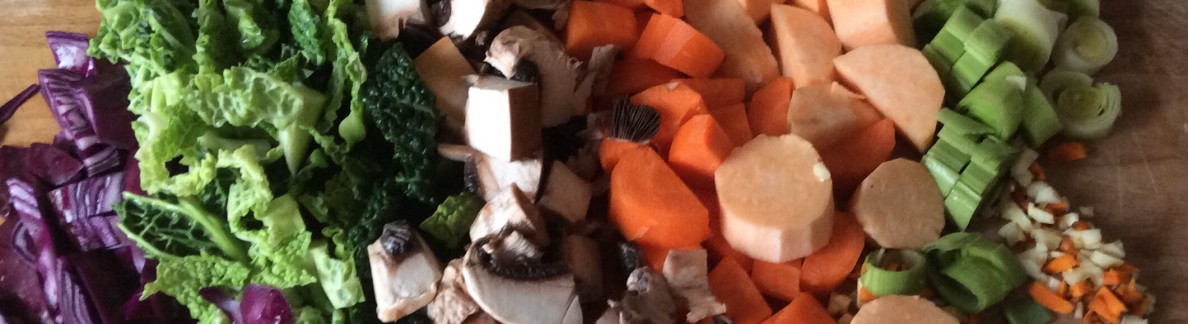
Home-made almond milk is so much tastier than that bought in cartons and is easy to make, especially if you have a high-speed blender. We use the Optimum 9200 from Froothie easy to use, easy to clean. The Retro Super Blend can also cope well with nuts, but we tend to use that for smoothies and the Optimum for milk as it has a slightly larger capacity.

Almonds are the king of the nut world in terms of nutrients: they are alkaline and full of vitamins and minerals, including B vitamins, Calcium and Vitamin D.  1 oz or 28g (a small handful) contains about 6g of protein. Most of the fat content is the healthier mono-unsaturated type.

So, have a go at making your own, it is a very satisfying activity. Because it is a very hands-on exercise, do make sure you wash your hands and nails thoroughly before starting.

All ingredients are organic where possible. This recipe makes about 1 litre.

You will need something to strain the milk, we use a nut milk bag bought on Amazon and still going strong a year later. It is easy to rinse out afterwards, do it straightaway under running hot water and hang up to air dry.

Method

Soak 1 Cup Raw Almonds overnight in enough filtered water to cover them.

image

They will look plump after soaking.

Drain and rinse. The rinse water removes phytates which bind to minerals in the body and prevent absorption.

Pour the soaked almonds into the blender with:

3 or 4 Cups Filtered Water, depending how creamy you like it

1 or 2 Pitted Medjool Dates, depending on how sweet you like it

A good pinch of Pink Himalayan Salt

Optional: 1/2 Tsp Vanilla Extract

Blend on Fast for about 60 secs.

image

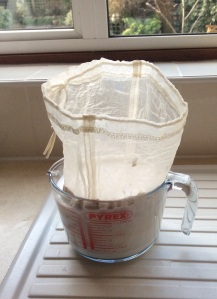
Strain gently through a nut milk bag or muslin cloth into a large jug.

Let it run through first, then very gently begin to squeeze. Don’t be too enthusiastic about this or you’ll end up with more on you and the work surface than in the jug! Be patient. It’s worth it.

image

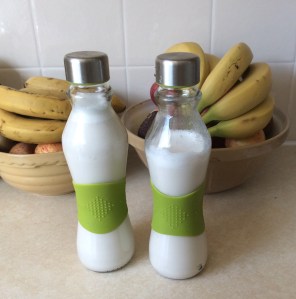
It can keep up to 4 days in an airtight jug or glass bottle (see Grip & Go below) in the fridge, but I doubt you will manage to make it last that long! It’s too good.

image

Ps You can dry the pulp on the lowest setting of the oven and use it as flour, in veggie burgers, or as it is in raw treats etc. See here for my Raw Pitch Dark Figgy Almond Slices.

Copyright: Chris McGowan

Sprouting for Health, Energy and the Environment!

Recently I published a recipe for Warming Stir-Fry with Avocado, Alfalfa and Sprouted Beans and was asked where to obtain the beansprouts. Well, the answer is, your kitchen counter!

It so easy to grow your own, takes no time or effort and they provide protein and oodles of more useable nutrients than cooked foods. Enzymes, vitamins, minerals, fibre and essential fatty acids (that burn fat and are usually in short supply in most diets) increase dramatically during the soaking and sprouting process and are more easily absorbed by the body.

Not only are homegrown sprouts good for body and soul (growing your own is a satisfying and life-affirming activity), but they are also good for the environment. Buy organic, untreated seeds, nuts, beans or legumes and you omit nasties: pesticides, additives and other unwanted chemicals. Ready grown sprouts are often treated with chemicals before packaging. (NB You need to buy seeds from a health food shop/supermarket or online eg Amazon etc NOT a gardening shop!)

They are inexpensive, 1 tablespoon of seeds produces several days’ worth of sprouts – depending on how often and how many people eat them! You can rotate the varieties and have your own little sprout garden in your kitchen, producing nutrient-dense plants for your salads, sandwiches and lunch-boxes and the children will enjoy the process of soaking, watering and watching them grow as well as benefiting from the foods themselves.

So, what do you need and how do you do it?

There are 3 methods: the third actually produces microgreens, a stage further on than sprouting and involves soaking seeds and sprinkling them on a tray of organic soil, watering and letting them grow. But we want to produce sprouts, so you need either a sprouting tower like this one:

This thirty-year-old tower has 3 sprouting trays, a lid that is ventilated to allow air to circulate and a bottom tray where the water drains off – if buying new, check it is BPA-free

or large, wide-mouth mason jars with either sprouting lids (available from healthfood stores or online), cheesecloth or muslin and a rubber band to keep it in place.

You can sprout most seeds, nuts, beans or legumes – except kidney beans, they are poisonous if eaten raw.

For either method, the first thing you need to do is wash your hands – hygiene is important, then rinse the seeds and pick out any grit or discoloured or broken ones and soak them overnight in pure water. For 3 trays, you could use 1-2 teaspoons of alfalfa or broccoli seeds between 2 of them and 1-2 tablespoons of mung beans in the third. Use 3 times as much water as seeds. (Broccoli seeds provide many times more nutrients than normal broccoli).

image

(If using jars, you can put them straight into the containers). Next morning, drain them into the trays and rinse again (one type of seed per tray, they all grow at different rates).

Rinse and drain twice a day, pouring away the excess water.

image

After Day 1, the mung beans have swollen and are beginning to sprout.

For the jars, cover and stand upside down, if possible at a slight angle, and rinse at least twice a day.

The sprouts will grow faster in warmer weather and in exceptionally hot weather may need an extra rinse. Don’t let them dry out but don’t overwater! Be sure to drain off the excess to prevent mould and bacteria developing.

image

After 2 days, they are well on their way. These were growing during a very cold February.

image

3 days and the mung beans are about an inch long and ready to use! The alfalfa needs another couple of days.

image

When you harvest the mung beans, rinse and either store them as they are, covered in the fridge – they will last up to a week or more – or place in a bowl of water, swish them around and the green hulls will float off and can be removed if desired. Some people think they are a little bitter, but of course you will be discarding nutrients too.

The sprouts can be used in salads, sandwiches, with stir-fries or as garnish for warm soups (the less heat the more nutrients you retain).

image

Sprouted seeds, beans, nuts and legumes are highly nutritious and are particularly rich in Vitamins A, B Complex, C and E, but alflafa is also a good source of Calcium, and a very good source of Vitamin K, Folate, Iron, Magnesium, Phosphorus, Zinc, Copper and Manganese.

image

28596240_Unknown

Broccoli Sprouts

You can have a lot of fun with the kids using alfalfa sprouts:

image

There have been comments in the media about the dangers of ecoli in beansprouts. Firstly, I would say commercial enterprises don’t much like us growing our own rather than buying their nutrient-poor, mass-produced products and secondly, providing you keep up your hygiene standards: wash your hands, drain off the soaking water and scrub out the trays/jars, then all should be fine.

We have been growing sprouts for 30 years and neither my family nor friends have had one problem with ecoli.

I hope this helps inspire you to start producing your first beansprouts.

Copyright: Chris McGowan