Easter Coconut & Almond Truffles

image

So good to have some sun again after weeks of rain!

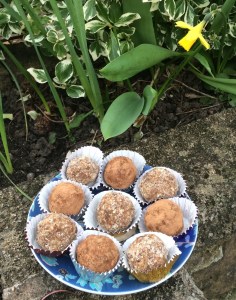
These Raw Truffles were made from the pulp left over from the almond milk this morning. (See Almond Milk Recipe). The pulp was left wet and everything was done in the processor. Very quick and simple.

Ingredients

Leftover Pulp fom just under a Litre of Almond Milk

1/2 Cup Raisins

1/2 Cup Desiccated Coconut

4 Dates

1 Tbsp Chia Seeds*

1 Tbsp Raw Organic Coconut Oil

1 Tsp Vanilla Extract

1 Tsp Maple Syrup

For Dusting (Optional): Desiccated Coconut, Finely Chopped Almonds, Raw Cacao Powder*

Method

Process everything until it comes together and you can press it into balls. It doesn’t take long. Place in the fridge in an airtight container and they’ll keep well.

Some garden photos to celebrate Spring!

image

image

Love the smell of hyacinths

image

Nesting materials for the birds – we have a pair of robins, several blackbirds, goldfinches, sparrows, blue tits, great tits and a pair of wrens! Idea from Pioneering the Simple Life.

image

*http://www.therawchocolatecompany.com/

Copyright: Chris McGowan

Easter Weekend Offer From Grip&Go Bottles

This Easter weekend the people at Grip and Go are offering a 15% discount for my followers on their stylishly quirky glass bottles (click on the link to go to their website, discount code at end of this post).

They come in 3 sizes, are dishwasher safe and are great for storing juices, nut milks or water. They fit in the fridge door and the thin-waisted ones are fantastic if you have a grip problem or if you have wet hands.

The bottles are also available with easy-grip lids as well as stainless steel ones.

The one on the right has a chalking surface so you can write on what the contents are!

I love this fun twisty bottle:

image

The bottles come in several bright colours. There’s also a travel mug.

They have excellent customer service. Oh, and Free Delivery too!

So much better to have reuseable glass bottles, better for you, better for the environment – ditch the plastic!

Use Discount Code: JUICENUT15

Copyright: Chris McGowan

Love Brazils? Beware Potential Selenium Overload!

I got a shock the other day. I have been vegetarian for 40 years and was confident I was never short of any essential vitamins or minerals. I paid attention to what I ate, rarely ate junk food and took supplements when I felt the need. All tests have always come back normal. Since becoming vegan a year ago, I have researched which areas of my diet may need more rigorous attention and apart from a B12 supplement, I decided it was far better to eat a balanced, plant-based diet than to buy expensive supplements that I may or may not need and may or may not absorb on the off-chance that I may become slightly deficient.

 I had read that a good source of Selenium for vegans was Brazil nuts. Fantastic, I thought, I love Brazil nuts. They became my favourite morning snack. I would eat at least 6 and maybe 10 a day.

When I decided to research and write a series of posts on essential vitamins and minerals, I read about Selenium in a little more detail. That’s when I got the shock.

The BDA – the association of British Dieticians – recommends eating only 1-2 Brazil nuts a day and no more than 3-4 due to the possibility of Selenium toxicity!

The Adult RDA for Selenium is 55mcg (micrograms) with an upper limit of 400mcg.

I was consuming about 30g of Brazil nuts, which is approximately 575mcg of Selenium per day!

image

(100g of Brazil nuts per month provides the requisite amount).

Selenium is required for healthy thyroid function, to strengthen the immune system, protect cells from damage, and reduce the risk of cancer and heart disease. The amount of Selenium in our foods has depleted due to poor quality soil and contaminated water and varies considerably according to where you live.

However, studies conducted on vegans in the UK, Germany, US and New Zealand (the latter has very low levels of selenium in the soil) showed that the majority were taking adequate amounts of Selenium.

Symptoms of Selenium toxicity include:

Hair loss, fatigue, irritability, white spots on nails, gastrointestinal disorders and neurological damage.

Stopping the excess Selenium and drinking lots of water usually reverses the damage.

Fortunately, I seem to have avoided these problems but I will miss my favourite snack.

Sources of Selenium:

Brazil  Nuts: 30g = 575mcg

Wholewheat Spaghetti 215g = 56mcg

Couscous: 140g = 39 mcg

Shitake Mushrooms 85g = 21 mcg

Wholewheat Flour 30g = 20mcg

Sunflower Seeds 30g = 16mcg

Sources: The Vegan Society

Rich Vegan Foods

Copyright: Chris McGowan

Walnut & Banana Smoothie with Raw Chocolate Mulberry Chips

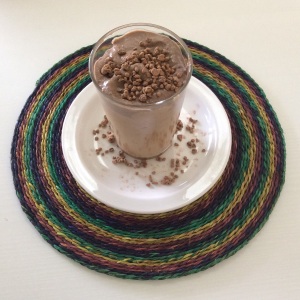
This is a really thick smoothie – you will definitely need a spoon! – so feel free to adjust the amount of liquid if you prefer it thinner. It is intended as a meal replacement.

image

Walnuts are a powerhouse of nutrients: protein, Vitamin E, B vitamins, healthy oils, fibre – good for the brain, good for the heart. Apricots contain iron and Vitamin A while Romaine, Quinoa, Sunflower and Hemp Seeds are also good sources of protein, Banana has potassium – also good for your heart – and Cacao, well, what doesn’t it have and what’s not to like?!

All ingredients are organic where possible.

Ingredients

Small Banana

4-5 Organic Dried Apricots, rinsed

1 Tbsp Quinoa Flakes

3 Large Romaine Leaves, washed and chopped

1 Tbsp Sunflower Seeds

1 Tbsp Raw Hemp Seeds*

1 Tbsp Raw Cacao Powder *

Handful Walnut Pieces or Halves

1 Tbsp Dried Mulberries*

1 Tbsp Raw Chocolate Mulberry Chips* to sprinkle on top

1 Small Glass Fresh Apple Juice + some filtered water if you want it a little thinner

Blend all except the extra Raw Chocolate Mulberry Chips, then sprinkle them on top. Sit back, relax and savour this raw chocolate smooth sensation!

This is for you, K! 😉

*from The Raw Chocolate Company

Copyright: Chris McGowan

Make Beetroot Your New Veg Friend! (Juice Recipes Included)


image

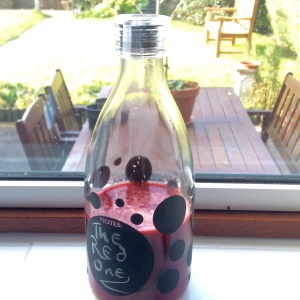
The Red One – Recipe Below (along with details of where to buy the glass bottle)

When I was at school and had school dinners, they used to give us sliced boiled beetroot with shepherd’s pie once a week. It turned the mashed potato a blushing pink. In those days we ate what we were given, both at home and at school, there were no menu options. I loved school dinners and whilst I wasn’t a big fan of boiled beetroot, it was ok. I ate it. Then in my teens I started taking packed lunches and between then and 2 years ago, not another slice of beetroot passed my lips. We never had it at home and later when I had my own family, my husband didn’t like it so we just never bought it.

Juicing changed all that. When I came to have my first juice with beetroot in, I was somewhat apprehensive. To my surprise, I liked it and given all its nutritional benefits, beetroot became My New Veg Friend.

It is advisable when you first begin juicing to add some fruit, especially lemon and/or berries, even ginger, which I still do, I’m not that hardcore that I drink straight beetroot juice! It has a slightly earthy flavour which some people aren’t keen on, although some varieties are sweeter than others. This is reduced if you remove the skin, but of course you’ll also be removing vital nutrients.

image

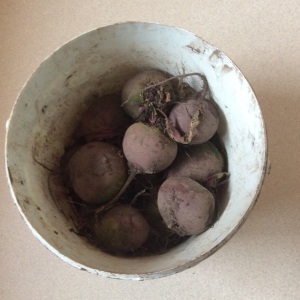
A welcome donation from our neighbour’s allotment

To my surprise, my previously juice-sceptic husband started having a daily beetroot juice too. I convinced him that it would help his blood pressure and now it has become part of his daily routine. And he doesn’t even drink it with a peg on his nose! He certainly feels healthier for it.

He gets regular exercise cleaning up after he’s made it too – for some reason, he always manages to get beetroot juice everywhere! So be warned, it stains, you’re advised to wear an apron and rubber gloves!

Just one of the many beetroot explosions in our kitchen, it even reached the ceiling once!

Beetroots are rich in iron, potassium, magnesium and folate, are anti-imflammatory, rich in anti-oxidants and are good for heart and blood health. They increase blood flow to the brain and improve exercise performance. Regular drinking of beetroot juice has been shown to reduce blood pressure.

Here’s one of the beetroot recipes we use – full of anti-oxidants, it is also anti-inflammatory, mineral-rich and has protein from the romaine leaves (see below for links to other beetroot juice recipes)*

The Red One

Ingredients

(Organic if possible)

1 Small or Half a Medium Beetroot – If organic and you’re used to beetroot, just chop the ends off, scrub well and leave the peel on

2-3 Medium Carrots, scrubbed

6 Romaine leaves, rinsed well

Thick Slice of Wax-Free Lemon – if organic, scrub and leave peel on, if not peel thinly leaving as much pith as possible.

Chunk of Ginger – size depending on whether or not you are used to the taste, it doesn’t want to be overpowering

2 Medium Apples

Half a Mango or Large Handful of Mixed Berries

Method

Juice all ingredients except Mango or Berries. Blend them into the juice, add ice.

(Beetroot is also a great tomato substitute: if you’re nightshade-sensitive and miss pasta or pizza sauce see my post Amazing Tomatoless Sauce)

*Winter Beetroot Wonder-Juice: Refreshing, Nutritious, Simple

Election Day Special Fruity Beetroot Juice

Blended Breakfast Beetroot Juice

Hot, Hot, Hot Anti-Inflammatory Beetroot & Ginger Juice!

Here’s one for beetroot soup:

Vegan, Gluten-Free Carrot, Beetroot & Basil Soup

and a burger recipe:

Nutty Bean & Beetroot Veggie Burgers with Quinoa & Redcurrants

You can even have beetroot in your porridge!

Pink Oats, Anyone?

The glass bottle in the photo is by Grip and Go UK. They produce a variety of stylish glass bottles in quirky shapes, some with colourful silicone grips and easy grip lids, or you can choose stainless steel lids. The bottles are dishwasher-safe and you can even chalk on the one in the photo, great fun! Ditch the plastic!

Here’s a gentle, relaxing YouTube video of Beethoven’s Moonlight Sonata (see what I did there? 😉) to listen to while you sip your juice.

 Copyright: Chris McGowan

Amazing Tomatoless Sauce

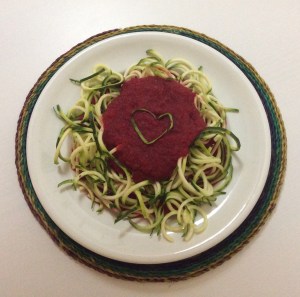
For those of us who are sensitive to nightshade foods – potatoes, aubergines, tomatoes and peppers – it can be difficult to find an acceptable substitute for pasta or pizza sauce. Until now! The lovely Hanna at My Goodness Recipes has come up with the goods yet again. I tried out her Tomatoless Sauce Recipe and it really works. It keeps well too. Give it a go, you’ll be so glad you did ☺️👏🏻

Here’s my version with zoodles:

image

Ps Her photos are much better!

Copyright: Chris McGowan

Hanna Sillitoe's avatarMy Goodness

pasta

Okay … this has to be my absolute favourite creation ever! I know, it’s a strange one right? How can tomato-less sauce beat raw snickers cake or dreamy caramel ice cream? Trust me, it does. Not only does it taste absolutely amazing, it also contains nothing but pure vegetables. No sneaky artificial flavourings or additives. Honestly, it’s wizardry!

View original post 423 more words

B12: What Is It & Do We Need to Supplement?

After ‘Where do you get your protein/calcium/iron from?’ most vegans will sooner or later have to face the B12 question.

It is an important topic, but not just for vegans: B12 deficiency can occur in meat-eaters (farm animals are often deficient and require supplementation),  as well as pregnant women and breast-fed infants whose mothers are vegan, whilst the over-50’s can be deficient due to poorer absorption.

So what is B12, why do we need it, where do we find it, how much do we need and in what form?

B12 is a water-soluble vitamin that is one of the compounds required by the body to convert food into energy. It is required for a healthy nervous system, good bone health and in the development and protection of nerve cells and red blood cells.

B12 deficiency can have severe effects on adults, babies and children, long-term vegans, raw food and macrobiotic vegans, the breast-fed infants of vegan mothers and can lead to serious complications in pregnancy such as pre-eclampsia and neural tube defects.

Symptoms of deficiency can be fatigue, anaemia, poor concentration, gastrointestinal disorders, tingling in hands and feet, and irritability. Severe deficiency can lead to nerve damage, Alzheimer’s disease, pernicious anaemia, spinal cord degeneration and heart disease. There is a also a higher risk of bone fractures.

B12 is produced by micro-organisms and is present in the soil in which we grow our food – or at least, it used to be. A combination of demineralisation through modern farming methods and our concerns about hygiene and bacteria – resulting in the cleansing of soil from vegetables – means we can’t just rely on normal food sources: we are advised to include fortified foods or take supplements.  Well, some experts do and some aren’t too sure! More on this later.

Non-vegans routinely obtain B12 from animal sources: cooked liver, fish/seafood, poultry, eggs, milk amd cheese. However, as I said earlier, these sources are becoming less reliable and older people whether omnivores or vegans are less able to absorb the amounts necessary for healthy bodily functions.

Recommended daily amounts tend to vary from country to country, so you may need to do a little research to find out if you are getting enough.

The Vegan Society in the UK recommends eating fortified foods such as breakfast cereals, plant milks, yeast extract or nutritional yeast with every meal to obtain 3 mcg (micrograms) per day OR a daily supplement of at least 10 mcg OR a weekly supplement of at least 2000 mcg. Good quality organic Aloe Vera juice is also a good source of B12.

It is best to take little and often but the less often you have it the more your body needs, so a higher dose weekly supplement should also provide enough protection.

Traditionally, vegans have relied on sea vegetables and algae such as spirulina, nori and so on, as well as barleygrass, but there is now some doubt as to their efficacy:  recent studies have concluded that these sources are unreliable and possibly dangerous due to contamination. They are believed to contain B12 analogues which can interfere with B12 absorption and metabolism.

Most experts seem to advise supplementation.

But even this is not without controversy! Here comes the science bit: Many supplements are in synthetic form which is not as bioavailable and the general consensus seems to be that Methylcobalamin is the most bioavailable source and ideally a supplement should be a combination of Methylcobalamin and Adenosylcobalamin.

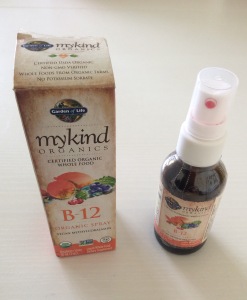
imageSublingual sprays are often preferred to tablets. Global Health Centre recommends VeganSafe B12.

I found it very hard to find an organic B12 supplement and they are very expensive. However, they do last a long time. I had to buy mine from Mykind Organics in the US. I have been taking a weekly spray of 5000 mcg for about 6 months now and my B12 levels are fine. It is raspberry flavoured and very easy to use.

I hope this has helped clarify this issue, it is difficult to be sure of getting the right information when even those trained in this area aren’t even in full agreement!  Watch the short video of a debate on the subject by a panel of experts in nutrition at the end of this article.

Sources: The Vegan Society

Forks Over Knives

Global Healing Centre

Dr Steven Lin

Copyright: Chris McGowan

Juicing Accessories I Can’t Do Without!

As a regular juicer for over 2 years, I’ve acquired a few accessories that I wouldn’t want to do without, so I thought I’d write a post about my juicy recommendations. Naturally, there are other brands of similar items available but these are the ones I actually use and which I’ve had for the most part for all of that time.

image

After the juicer and blender, the first thing I bought was a couple of metal juice flasks. These are great at keeping juices fresh in the fridge and help them last longer by keeping them cold and away from light and air, thereby slowing down the oxidising process. Always fill up to the top to prevent air spoiling the juice, adding ice chips helps too. They are good for carrying around so long as you don’t leave them in the car getting warm. This one is from Juicemaster and is the 0.4L size. It also comes in 0.6L  and there is a Sigg equivalent too.

The next thing you need if you are using flasks of any kind is a long-handled flexible brush that will reach right down and clean them out properly. Good hygiene is essential when juicing, all equipment and accessories need to be thoroughly cleaned to prevent the growth of harmful bacteria.

image

Again, this one is from Juicemaster and still going strong after two years. While we’re talking brushes, I’d also say you need a good vegetable scrubbing brush too so you can leave the skin on your veggies.

It is always best to drink your juices through a straw to protect your teeth, but I have a problem with plastic straws: I don’t like ingesting chemicals, plastic is bad for the environment and you have to keep buying them. Instead, I found some stainless steel ones that come as a set of 4 (somehow one has disappeared!) with a tiny spiral brush for cleaning them.

image

They are available on Amazon and currently cost around £4. They can be placed in the dishwasher and sterilised.

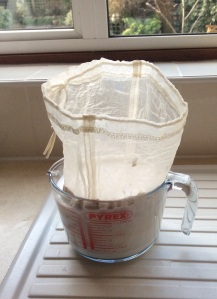
Once we mastered juicing  we moved on to making our own nut milks (see here for Nut Milk, Shake & Smoothie Recipes), and my next must-have accessory is a nut milk bag for straining the milk from the pulp. There are several different kinds and shapes available, I got mine on Amazon. It is easy to rinse through under the tap and hang it by the drawstring to air dry. Always rinse it out straightaway to make sure it is completely clean – don’t let the pulp dry in the bag, it will be so much harder to remove.

image

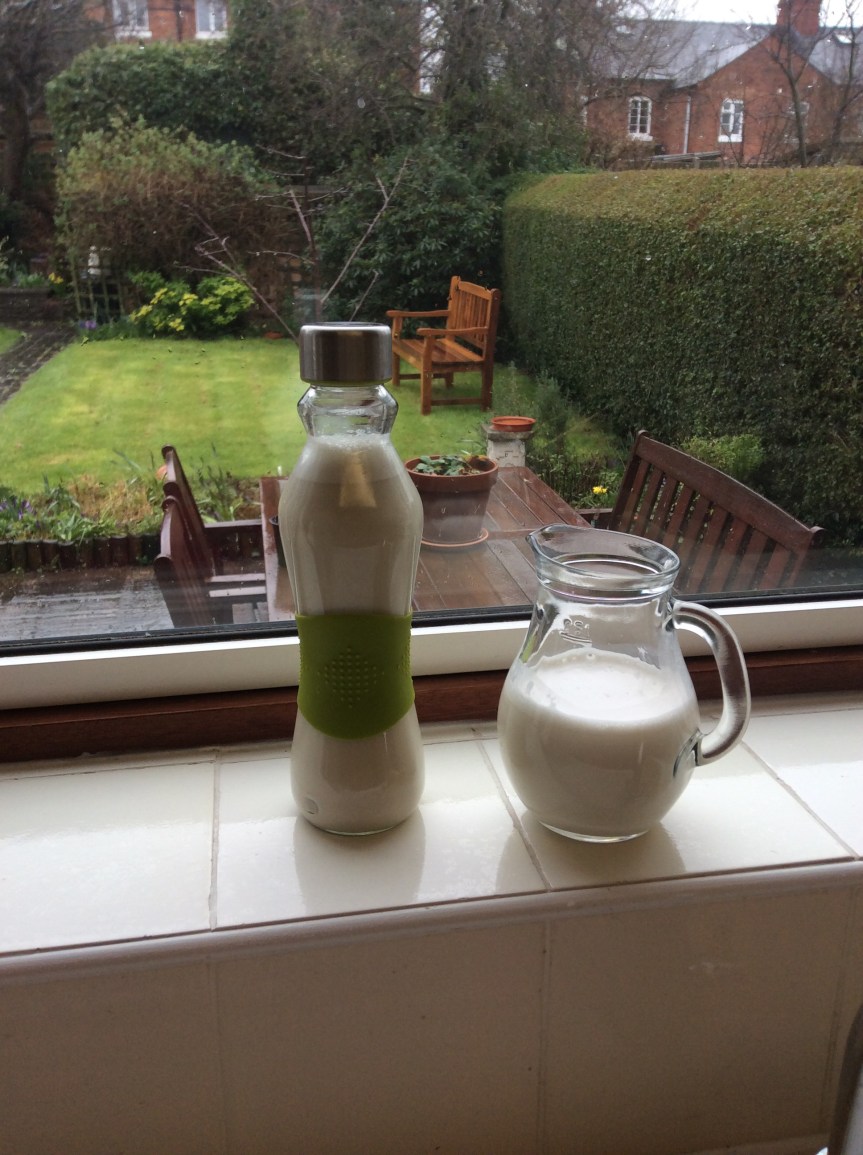
Once we started making nut milk, we needed something to store it in! I prefer glass to plastic and we found a great 500ml glass bottle by Grip & Go on Amazon which, if you’re like me and have a dodgy grip, is so much easier to hold: it has a thinner middle around which is a textured silicone grip. You can get them in many colours and two sizes, they are dishwasher safe apart from the lid and they don’t leak. I originally had a glass jug with a plastic lid, but it was neither airtight nor leakproof so the milk went off quicker and you couldn’t shake it up without getting splashed.

image

I bought 2 x 500ml bottles after finding the 1L bottle too heavy. They fit easily in the fridge door and look good too. The company also do a quirky twisty glass bottle that looks even better for those with grip problems like me. Great for juices too!

Copyright: Chris McGowan

Rocket-Powered Smoothie


image

Adding greens to your smoothies gives them and you an extra boost of important nutrients: Proteins, Vitamins, Minerals and Fibre.

Rocket, or Arugula, is a cruciferous vegetable – like Kale and Sprouts – which are associated with a lower risk of cancer, in particular lung and colon cancer. It provides Calcium and Vitamin K for bone health, antioxidants, Iron and B Vitamins, including Folate, and contains nitrates, which lower Blood Pressure and the amount of oxygen required during exercise, while enhancing athletic performance.

It has a light, slightly herby flavour and is not at all overpowering when combined with fruit, nuts and seeds. I was pleasantly surprised the first time I tried it when we ran out of Romaine Lettuce.

(Remember to alternate cruciferous with non-cruciferous greens to protect your thyroid health).

This is a thick smoothie, you’ll need a spoon! (You can reduce the oats if you want it thinner).

Ingredients

1 Banana

2 Tbsps Gluten-Free Oats

A Large Handful Rocket Leaves

1 Rounded Tbsp Sunflower Seeds

1 Tbsp Cashew Nut Butter

1 Tsp Wheatgrass Powder

1/2 Mango

1 Tbsp Dried Mango Pieces

Small Glass of Fresh Apple Juice + a little water if you want a thinner smoothie

Blend and serve! Add ice if you’re not sure about the greenery, it helps when you’re not accustomed to green smoothies, but this has such a fruity flavour from the dried mango and apple juice, you’ll be fine ☺️

Copyright: Chris McGowan

Sprouting for Health, Energy and the Environment!

Recently I published a recipe for Warming Stir-Fry with Avocado, Alfalfa and Sprouted Beans and was asked where to obtain the beansprouts. Well, the answer is, your kitchen counter!

It so easy to grow your own, takes no time or effort and they provide protein and oodles of more useable nutrients than cooked foods. Enzymes, vitamins, minerals, fibre and essential fatty acids (that burn fat and are usually in short supply in most diets) increase dramatically during the soaking and sprouting process and are more easily absorbed by the body.

Not only are homegrown sprouts good for body and soul (growing your own is a satisfying and life-affirming activity), but they are also good for the environment. Buy organic, untreated seeds, nuts, beans or legumes and you omit nasties: pesticides, additives and other unwanted chemicals. Ready grown sprouts are often treated with chemicals before packaging. (NB You need to buy seeds from a health food shop/supermarket or online eg Amazon etc NOT a gardening shop!)

They are inexpensive, 1 tablespoon of seeds produces several days’ worth of sprouts – depending on how often and how many people eat them! You can rotate the varieties and have your own little sprout garden in your kitchen, producing nutrient-dense plants for your salads, sandwiches and lunch-boxes and the children will enjoy the process of soaking, watering and watching them grow as well as benefiting from the foods themselves.

So, what do you need and how do you do it?

There are 3 methods: the third actually produces microgreens, a stage further on than sprouting and involves soaking seeds and sprinkling them on a tray of organic soil, watering and letting them grow. But we want to produce sprouts, so you need either a sprouting tower like this one:

This thirty-year-old tower has 3 sprouting trays, a lid that is ventilated to allow air to circulate and a bottom tray where the water drains off – if buying new, check it is BPA-free

or large, wide-mouth mason jars with either sprouting lids (available from healthfood stores or online), cheesecloth or muslin and a rubber band to keep it in place.

You can sprout most seeds, nuts, beans or legumes – except kidney beans, they are poisonous if eaten raw.

For either method, the first thing you need to do is wash your hands – hygiene is important, then rinse the seeds and pick out any grit or discoloured or broken ones and soak them overnight in pure water. For 3 trays, you could use 1-2 teaspoons of alfalfa or broccoli seeds between 2 of them and 1-2 tablespoons of mung beans in the third. Use 3 times as much water as seeds. (Broccoli seeds provide many times more nutrients than normal broccoli).

image

(If using jars, you can put them straight into the containers). Next morning, drain them into the trays and rinse again (one type of seed per tray, they all grow at different rates).

Rinse and drain twice a day, pouring away the excess water.

image

After Day 1, the mung beans have swollen and are beginning to sprout.

For the jars, cover and stand upside down, if possible at a slight angle, and rinse at least twice a day.

The sprouts will grow faster in warmer weather and in exceptionally hot weather may need an extra rinse. Don’t let them dry out but don’t overwater! Be sure to drain off the excess to prevent mould and bacteria developing.

image

After 2 days, they are well on their way. These were growing during a very cold February.
image

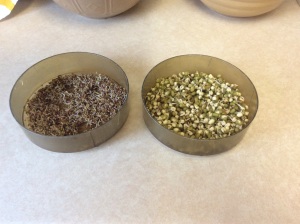
3 days and the mung beans are about an inch long and ready to use! The alfalfa needs another couple of days.

image

When you harvest the mung beans, rinse and either store them as they are, covered in the fridge – they will last up to a week or more – or place in a bowl of water, swish them around and the green hulls will float off and can be removed if desired. Some people think they are a little bitter, but of course you will be discarding nutrients too.

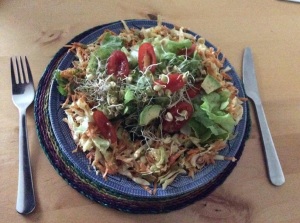
The sprouts can be used in salads, sandwiches, with stir-fries or as garnish for warm soups (the less heat the more nutrients you retain).
image

Sprouted seeds, beans, nuts and legumes are highly nutritious and are particularly rich in Vitamins A, B Complex, C and E, but alflafa is also a good source of Calcium, and a very good source of Vitamin K, Folate, Iron, Magnesium, Phosphorus, Zinc, Copper and Manganese.

image

28596240_Unknown

Broccoli Sprouts

You can have a lot of fun with the kids using alfalfa sprouts:

image

There have been comments in the media about the dangers of ecoli in beansprouts. Firstly, I would say commercial enterprises don’t much like us growing our own rather than buying their nutrient-poor, mass-produced products and secondly, providing you keep up your hygiene standards: wash your hands, drain off the soaking water and scrub out the trays/jars, then all should be fine.

We have been growing sprouts for 30 years and neither my family nor friends have had one problem with ecoli.

I hope this helps inspire you to start producing your first beansprouts.

Copyright: Chris McGowan