B12: What Is It & Do We Need to Supplement?

After ‘Where do you get your protein/calcium/iron from?’ most vegans will sooner or later have to face the B12 question.

It is an important topic, but not just for vegans: B12 deficiency can occur in meat-eaters (farm animals are often deficient and require supplementation),  as well as pregnant women and breast-fed infants whose mothers are vegan, whilst the over-50’s can be deficient due to poorer absorption.

So what is B12, why do we need it, where do we find it, how much do we need and in what form?

B12 is a water-soluble vitamin that is one of the compounds required by the body to convert food into energy. It is required for a healthy nervous system, good bone health and in the development and protection of nerve cells and red blood cells.

B12 deficiency can have severe effects on adults, babies and children, long-term vegans, raw food and macrobiotic vegans, the breast-fed infants of vegan mothers and can lead to serious complications in pregnancy such as pre-eclampsia and neural tube defects.

Symptoms of deficiency can be fatigue, anaemia, poor concentration, gastrointestinal disorders, tingling in hands and feet, and irritability. Severe deficiency can lead to nerve damage, Alzheimer’s disease, pernicious anaemia, spinal cord degeneration and heart disease. There is a also a higher risk of bone fractures.

B12 is produced by micro-organisms and is present in the soil in which we grow our food – or at least, it used to be. A combination of demineralisation through modern farming methods and our concerns about hygiene and bacteria – resulting in the cleansing of soil from vegetables – means we can’t just rely on normal food sources: we are advised to include fortified foods or take supplements.  Well, some experts do and some aren’t too sure! More on this later.

Non-vegans routinely obtain B12 from animal sources: cooked liver, fish/seafood, poultry, eggs, milk amd cheese. However, as I said earlier, these sources are becoming less reliable and older people whether omnivores or vegans are less able to absorb the amounts necessary for healthy bodily functions.

Recommended daily amounts tend to vary from country to country, so you may need to do a little research to find out if you are getting enough.

The Vegan Society in the UK recommends eating fortified foods such as breakfast cereals, plant milks, yeast extract or nutritional yeast with every meal to obtain 3 mcg (micrograms) per day OR a daily supplement of at least 10 mcg OR a weekly supplement of at least 2000 mcg. Good quality organic Aloe Vera juice is also a good source of B12.

It is best to take little and often but the less often you have it the more your body needs, so a higher dose weekly supplement should also provide enough protection.

Traditionally, vegans have relied on sea vegetables and algae such as spirulina, nori and so on, as well as barleygrass, but there is now some doubt as to their efficacy:  recent studies have concluded that these sources are unreliable and possibly dangerous due to contamination. They are believed to contain B12 analogues which can interfere with B12 absorption and metabolism.

Most experts seem to advise supplementation.

But even this is not without controversy! Here comes the science bit: Many supplements are in synthetic form which is not as bioavailable and the general consensus seems to be that Methylcobalamin is the most bioavailable source and ideally a supplement should be a combination of Methylcobalamin and Adenosylcobalamin.
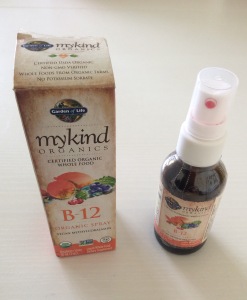
imageSublingual sprays are often preferred to tablets. Global Health Centre recommends VeganSafe B12.

I found it very hard to find an organic B12 supplement and they are very expensive. However, they do last a long time. I had to buy mine from Mykind Organics in the US. I have been taking a weekly spray of 5000 mcg for about 6 months now and my B12 levels are fine. It is raspberry flavoured and very easy to use.

I hope this has helped clarify this issue, it is difficult to be sure of getting the right information when even those trained in this area aren’t even in full agreement!  Watch the short video of a debate on the subject by a panel of experts in nutrition at the end of this article.

Sources: The Vegan Society

Forks Over Knives

Global Healing Centre

Dr Steven Lin

Copyright: Chris McGowan

My Road to Raw – Going Veggie

                                      image

So what set me on the Road to Raw? It didn’t happen all at once. In fact, it very nearly didn’t happen at all. It was a long process. First I had to embrace vegetarianism.

Our best friends were vegetarian and we respected their choice, happily eating vegetarian meals whenever we got together. But we just felt we were fitting in. It didn’t really cause us to think about the issues. We never discussed it with them. Then our son was born, we moved away, led separate lives and I thought no more about it.

Until my son was two and a half.

By now I had developed a love for cooking, my son did too, and as the fad for adding bran to all things edible took hold, we graduated to baking wholemeal bread and scones, pizza bases and cakes. We substituted Flora for butter as we were urged to replace saturated animal fat with polyunsaturated margarine ‘for a healthy heart’. I became more interested in food and health.

We often went to the local library, he chose Richard Scarry and I optimistically chose sewing – I never did make that quilt – and books on conscious eating. One of these I recognised. My vegetarian friend had mentioned it when we had talked about my newfound interest in food and health.

Frances Moore Lappé’s * Diet for a Small Planet is about eating to protect the planet’s resources: she maintained that adopting a meatless diet was the only way forward because a meat-based diet was not sustainable. Lappé also posited the theory of protein complementarity (bear with me, here comes the science bit!). She advocated combining certain protein-based plant foods at the same meal to ensure you had a complete protein to replace the meat protein. So, for instance, brown rice, lentils and nuts on the same plate.* (see below).

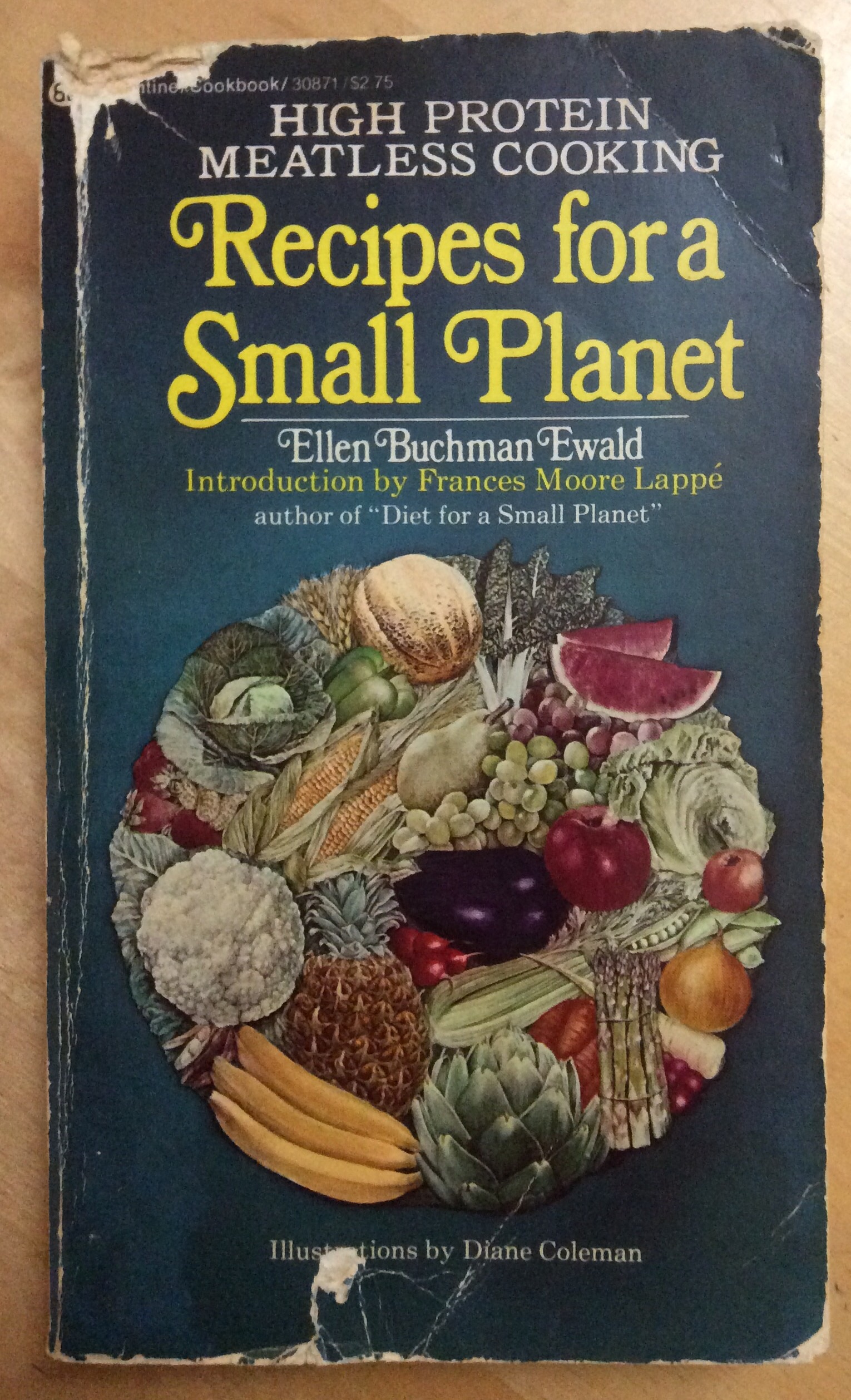
Later, I discovered its sister book written by her friend, Ellen Buchman Ewald: Recipes for a Small Planet. Ewald developed high protein recipes to simplify this process of complementarity for would-be vegetarians. This became my bible for quite some time – as you can tell by the photo! (the cat liked it too – see nibbled corner). She does use soya quite a bit but she also introduced me to carob, which I love! Her high protein Gorp cookies were a family favourite.

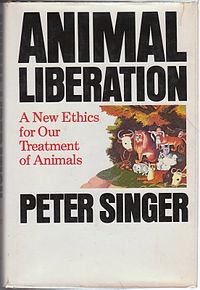
The other catalyst was coming across Australian philosopher, Peter Singer’s book Animal Liberation: A New Ethics for Our Treatment of Animals, which popularised the term speciesism and was not so much advocating equal animal rights, but rather their right to consideration and equal treatment as sentient beings who experience pain.

image

Together with the government campaign to cut down on animal fat, these books propelled me down the road to vegetarianism.

It was far from easy. My husband and son were not at all impressed that mince and bacon were no longer on the menu and we all reneged at using TVP (textured vegetable protein), which admittedly tasted like cardboard! And this was at a time when you were lucky to get a wilted salad if you ate out or visited friends – we ate a lot of omelettes! – and you were never invited to dinner parties.

By the time our daughter came along, we were fully-fledged veggies. I had a vegetarian pregnancy and was so much healthier than the first time, when I seemed to live off cheap meat and orange ice-lollies! She became a strong, healthy, vegetarian baby determined to run before she could walk.

We now shopped at Beano, then a small local co-operative selling legumes, oats, wholemeal flour and so on out of barrels. As I learned, so did my son, mixing up lurid concoctions of herbs and spices that he now uses on an everyday basis. He was particularly proud of the turmeric, curry powder and chilli combo, which turned out to be portentous as now every meal he makes or eats has to come with chilli on the side!

 image

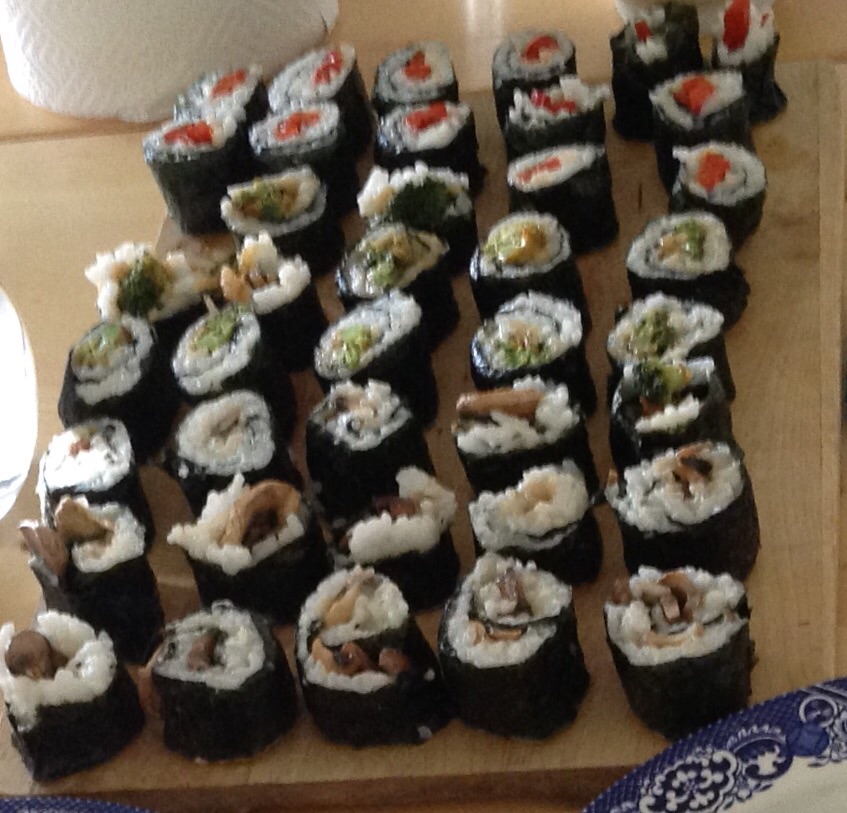
Vegetarian sushi made by my daughter.

 image

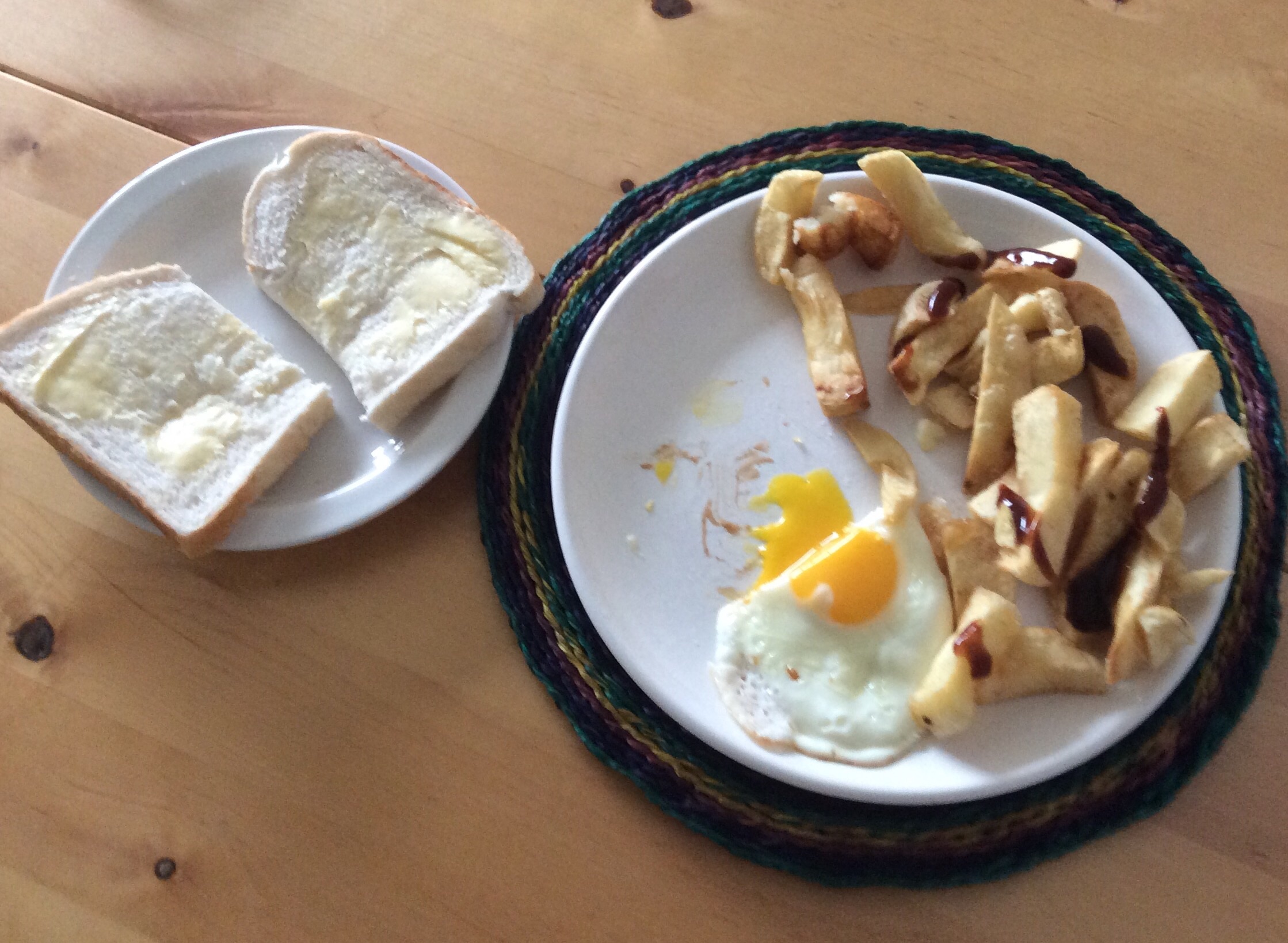
 Which would you rather have: a plate of vibrant, tasty sushi with tamari or chilli sauce, or a beige meal of processed white bread, margarine, deep-fried chips and fried egg?

Next time, I’ll write about how I found my raw energy!

*http://smallplanet.org

*This is because most plant proteins don’t have a full complement of the amino acids essential for the human body to develop, repair and renew. More recently, this theory has been amended in that it is now believed complementary proteins only need to be consumed within the same day, not necessarily the same meal.

Copyright: Chris McGowan