
My dad was of his time. Despite having a quick mind for figures, he left school at 14 and became a junior clerk for an accountant until – aged 17 – he joined the navy as a coder at the start of World War II. As for so many of that generation, 6 years listening to and sending signals in mostly hot climates while smoking plain cigarettes and being fed salt tablets, white rice and baked beans all had implications for his health later in life.
He began noticeably to lose his hearing in his early 40s – we would all have to endure the cavalry or the sheriff’s posse arriving on the scene at full pelt, shooting guns and rifles to loud rousing background music as he enjoyed his John Wayne films at weekends! Later, he would zone out as he could no longer follow a conversation and it took nearly 20 years for him to admit his difficulties and be persuaded to get hearing aids – and then we were all told off for shouting!
As for his diet, due to the wartime salt tablets, everything had to be covered in salt or it was tasteless to him. We all remember fondly the early Saturday morning salty bacon sandwiches with Dad before it was our turn to spend the morning out with him, be it washing the Morris Minor or visiting a customer. He would often sneak into the kitchen when Mum wasn’t looking and add more salt to the stew or another Oxo cube to the gravy, making it completely unpalatable to the rest of us and causing another argument at the table. Bags of Smiths crisps with blue twists of damp salt were regular treats.
Once out of the navy, he couldn’t face rice or beans in any form, thus restricting his meals to the meat and two veg variety with the emphasis on the meat. He didn’t get a lot of fibre, just plenty of animal protein and fat – but not the right kind of fat: no avocados, seeds or olive oil passed his lips and very little fish, unless it was battered and came accompanied with chips. The only nuts he ate were of the roasted and salted variety or the nuts in shells at Christmas. He would periodically put himself on a ‘diet’, this would involve starving himself all day, giving up potatoes and bread but sneaking a giant-sized bar of chocolate when it all got too much to sustain.
As a young man, he was active in a local cycling club and during his time in the navy and afterwards the Territorial Army, he enjoyed judo, motorbike scrambling and hiking. During the summers, when we were young, he would often set out with a bunch of children – some his own, some their friends – and our elderly mongrel dog, and we would have an impromptu walk around the country lanes singing old songs at the tops of our voices, often picking bilberries and blackberries as we marched along. The little dog’s legs would usually give up and Dad would end up carrying him!
Once he reached his 40s, however, all this came to a halt. By then, he was in a high-powered sales job requiring lots of driving and travelling, with many hours of early morning and late-night phonecalls and paperwork; targets had to be reached, conferences attended. We dreaded the words ‘re-org’ and ‘merger’ with their implications of redundancies, cross-country moves, weeks of worry and tension and more mounds of paperwork. At one point, he was also doing a driving job at weekends to help pay the mortgage on our new house. Now, the only activity was walking the dog when he was home. Once, he tried fishing and bought a small dinghy to take himself and my brothers off for the day to Scottish lochs, but mostly work got in the way of fresh air and exercise. (My brother has lots of amusing stories about those trips and tells me that no amount of expensive equipment enabled Dad to improve his catch rate: his line would inevitably catch no more than the branches of nearby trees!)
The light dimmed when he lost his eldest son in an accident.
He began to drink more and put on weight.
Later on, he took up bowls, a pastime his father enjoyed, and they played together whenever he had the opportunity. Grandad famously once had to present himself with his own trophy that he’d donated to the club! Dad joined a local club and became treasurer.  He had a few other hobbies over the years: making beer, photography, motorcycling, but they generally didn’t last very long as he had little free time and no-one to share them with – apart from the beer of course! He and 2 of the neighbours would congregate in our garage and put the world to rights over a glass or two of home brew whenever they were all at home and could escape the notice of their wives! He loved reading too and never sat anywhere without a book in his hand – a passion he passed on to me, and I to my son and daughter, along with his love of films and walking.
Aged 59, redundancy finally caught up with him. There was no-one left of his generation at his level in the company, they had all been made redundant or died of stress-related conditions. He was last man standing and I for one was very proud of that. He had spent all his adult life working hard, having little sleep, under pressure of deadlines, targets and teenagers! For his home was not the so-called haven of Victorian times: when he arrived home after a long journey and several days away, it would be to a stressed and exhausted wife and 4 disgruntled teenagers. He would argue with the boys over their long hair and with me over too much make-up! But the dog was happy to see him and looked forward once again to long early-morning walks in the woods chasing rabbits.
Mum and Dad sold up and moved back ‘home’ to where they’d been brought up, to the bosom of family and old friends. They bought a flat with no garden so that their offspring couldn’t move back in! (I had done it once with my toddler son as had my brother after his divorce).
 A few short months later, he was dead. Whilst pruning his father’s tree he had a heart attack, followed by two more in hospital over the next few hours. He was dead before I even knew he was ill.
With all that I now know about health, nutrition and lifestyle I realise that this was almost an inevitable outcome and I still feel so indescribably sad writing this. He had given up smoking cigarettes and alcohol a few years before he died, but found it too hard to give up both and switched to a pipe. He was still trying to adjust to being retired and hadn’t quite mastered the art of filling his days with something other than work.
I feel deprived of a soul mate. Despite all the disagreements over dress, make-up, hair dye and, later, sociology and politics, we are peas in a pod and I miss knowing him as an adult with my own family grown up. When my children were very young, there was so much Life to navigate, so many struggles with money, housing, illness. There was rarely an opportunity to spend time together, to share our interests: cinema, books, walking, family history, the War, sport. He loved telling tall tales and despite in-depth research, I still don’t know if he really had to swim 3 miles to land after his ship was hit!
I miss his sense of humour – his terrible jokes! – his twinkling eyes – my eyes – his mischief-making with the kids, his generosity of spirit. Despite coming from the ‘women’s place is in the home’ generation, Dad encouraged me in my education, sending me to grammar school when they couldn’t afford it and enabling me to become the first person in the family to go to university.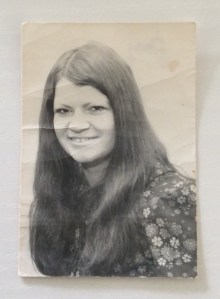 He always made my friends – even the long-haired, hippy variety! – welcome, occasionally driving them home in the early hours of New Year’s Day after a night of celebrating, with at least one head hanging out the window! I missed him at my son’s wedding; I missed him when I was doing a degree course about the reconstruction of Naples after the War, where he was stationed at the end, and desperately wanted to talk to him about it. I missed him when I got my degree: he was the one person I wanted to tell – but I knew he was looking over my shoulder, smiling with me as I read my results. I miss him every time I watch a western or a war film, but I know he is right there beside me waiting for the troops to arrive and save the day.
Thirty years on, he would be delighted to have 3 great-grandsons who also love being outdoors, going for long walks, cycling, swimming and camping. In fact, the eldest has just qualified as an Outdoor Pursuits Leader and the other two are currently wreaking havoc scrambling on their bikes and learning kung fu! And yes, Dad, they’ve all seen The Great Escape! The two youngest members of the family are only just mastering walking and talking, but the toddler is already a book-loving chatterbox whilst the newly-mobile baby is mastering the art of escape and reconnaissance!
The moral of this story? You are so much more than your job. Your health is important not just to your own quality of life but to those around you too. Time is precious. Time is something you never get back. Time spent on yourself now means time to spend with your family and friends later.
A recent study of Okinawan centenarians concluded an active life, a predominantly plant-based diet, fresh air and friends are the keys to the longevity kingdom, and not just to a long life but a life worth living, where they are still members of the community, not shut away in care homes watching daytime tv.
I am grateful to my dad for all his hard work and for the skills he passed on. He taught me to ride a bike and mend a puncture. He taught me how to light the fire – I still make paper knots out of newspaper! He taught me if a thing was worth doing, it was worth doing well. He taught me the importance of family and family history. He taught me the value of education. But he also nearly drowned me trying to teach me how to swim!
He moved us out of social housing and into our own home, sent me to university, helped pay the bills during difficult times. He always pulled the best Christmas surprise out of a hat; he helped look after the children when I was ill; he would drive anywhere at any time of day or night when needed, and even after he died, the small amount of money he was able to leave helped me do the degree I’d always wanted.
But one thing he couldn’t leave me was time.
My favourite photo:

On holiday, Dad was a different person, relaxed and funny and almost childlike in his enjoyment of the natural environment.
And to all those who say I look like him – yes, even down to his skinny legs!
I Wish All Dads A Happy Father’s Day!
Copyright: Chris McGowan



 pearsnotparsnipsdotcom
You must be logged in to post a comment.