Khaki Kiwi Coconut Smoothie!

This smoothie turned out a bit differently from how I’d envisaged, on one of those mornings when things don’t quite go to plan – read more about it in One of Those Days …

The bananas were still very green, despite having been on the windowsill for three days, so I decided to use avocado, kiwi fruit and some cocount milk left over from the previous night’s curry.  Some romaine lettuce and a little wheatgrass powder, would, I thought produce a vivid green smoothie vibrant with health and nutrition, begging to awaken my sleep-starved body. What could go wrong?

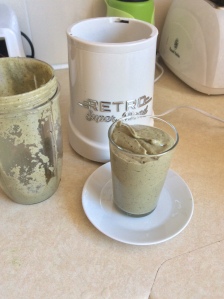
This happened:

image

I got a little carried away, adding blueberries and açaì powder. It came out khaki and looked less than appetising! And so thick I could probably use a knife and fork to eat it!

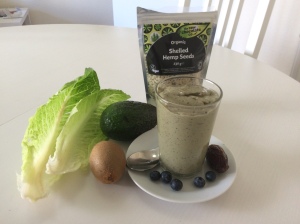
It tasted much better than it looked, however – the ugly duckling turned out to be more like a swan, so smooth as it glided down my throat – so let’s start again and pretend I knew what I was doing!

image

This brunch in a glass is brimming with antioxidants, minerals, protein and healthy fats. It came out very thick, so you may want to add more liquid.

Ingredients

Half a ripe Avocado

(you can freeze the other half if you remove the skin and stone and chop it up, useful for smoothies or guacamole). 

1 Kiwi fruit, peeled

2 large Romaine leaves, washed and chopped

1 Tbsp chopped Sweet Apricot Kernels* (you can use almonds)

2 Tbsps Shelled Hemp Seeds*

2 Tbsps Coconut Milk

1  or 2 pitted Medjool Dates

Handful of Blueberries

1 Tbsp Açaì Powder *

1 Tsp Wheatgrass Powder

Glass of fresh Apple Juice + a little filtered water

Blend and eat with a spoon – or a knife and fork!

The only video that could possibly illustrate this recipe is the great Danny Kaye’s The Ugly Duckling, however it’s been removed from YouTube due to copyright issues 😕

*http://www.therawchocolatecompany.com/

Copyright: Chris McGowan

What Colour’s Your Wee?! Water: Part 1 – Are You Hydrated?

(Spoiler alert: We are talking water, wee and whoopsies!)

Whenever my 85 year old mum comes to visit, I am struck by… Oops, sorry, Mum… I’d better quickly explain that no, I am not going to be discussing the colour of my mum’s wee!!

Let’s start again:

Whenever my 85 year old mum comes to visit, I am struck by her antipathy towards drinking plain, unadulterated water. The only water that passes her lips is a sip to wash down her medication. She only ever drinks coffee throughout the day and a glass of wine with dinner. Very rarely, in hot weather, she drinks a glass of orange squash.  I can’t persuade her even to finish the glass of water when she has her tablets. Yet, a lot of the time she is tired, confused and has difficulty walking due to problems with her leg muscles. These are just three of the typical symptoms of dehydration.

Dehydration in the elderly is of particular concern as symptoms can be mistaken for those of dementia, and they are often given yet more drugs to help counter its effects and slow its progression.

But it is not only the elderly who risk becoming dehydrated. As we (hopefully) approach Summer, we all could do with assessing our intake of such a vital substance as we become more active, expelling more breath and perspiring more in the (slight intake of breath) warmer temperatures. (One can but hope!)

Water makes up about 60% of our bodies and is essential in lubricating our joints, spinal discs and chord, transporting nutrients, and expelling waste products and toxins; it regulates our temperature and keeps the tissues in our ears, nose and throat moist. Water helps keep your blood thin and your Blood Pressure down and flushes away unwanted fats. We need to keep hydrated to keep healthy.

image

How do we know when we are dehydrated?

There are lots of signs that you are not taking in enough fluid:

  1. Constipation
  2.  Brain fog, feeling unfocused
  3. Confusion
  4. Headache
  5. Dizziness
  6. Muscle fatigue
  7. General fatigue
  8. Dry mouth
  9. Drowsiness
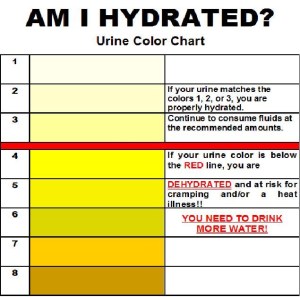
  10. Dark or strong-smelling urine: if you are well-hydrated, it should be straw-coloured.
  11. Stiff joints, disc problems
  12. In children, they are less active than usual
  13. Drinking too much coffee and/or alcohol  – they are diuretics

Many experts think that if you wait until you are thirsty, you are already dehydrated. They advise drinking small amounts of water throughout the day.

Drinking large amounts of water infrequently can put your body under stress.

Carrying a water bottle helps. Preferably not plastic.

image

(See Jerry Stainless Steel Bottles, a non-profit company supporting clean water projects in India and Africa).
image

Image courtesy of Jerry Bottles

(Colour may be affected by medication or Vitamin supplements – 1 person I know had a shock after taking a Vitamin B supplement!)

How Much Water is Enough?

The European Food Authority recommends 2.5 litres of total fluid per day for men and 2.0 litres for women, whilst the US Institute of Medicine recommends 3 litres (13 Cups) for men and 2.2 litres (9 Cups) for women. These amounts can vary according to health, weight, intensity of activity and where you live, temperature and so on.

70-80% should come from fluids and 20-30% from foods.

Children need 6-8 glasses of fluid over and above what they access from food, with younger children needing smaller drinks of 150ml size.

A general guide is to take your weight in pounds, divide by 2 and that is your amount of fluid required in fluid ounces.

Getting children to drink water can be really hard. Adding a slice of fruit or a strawberry may help. Starting them off as babies is perhaps the best policy and if they see you drinking water regularly, they will soon adopt the habit. Schools could do more to ensure children have the opportunity to drink throughout the school day, they would see results in the classroom in terms of concentration and energy. Parents can also ensure they take sugar-free drinks in their lunchboxes as well as hydrating foods.

All of us can benefit from eating more hydrating foods. Cucumber is well-known for its hydrating properties  (I juice it every day), but also celery, carrot, tomatoes, beets, fruits and salads. Most whole fruits and vegetables are made up of 80-90% water and go a long way to helping us keep up our fluid intake as well as giving us all their essential nutrients.

image

Your skin will benefit from all the extra fluid, vitamins, minerals and healthy oils while your eyes will be sparkly bright! Your brain will function better, you’ll feel more alert and focused. You may also get relief from some of the aches and pains in your joints and muscles.

Having trouble with your weight? Keeping up your fluid intake helps keep your weight in check: your body often interprets extreme thirst as hunger and so you eat more. If you ignore normal signs of dehydration, your body thinks, well if she’s not going to give me any actual fluid, I’ll have to get it the hard way – through food. And so you eat, and snack, until it gets what it needs.

If you don’t drink enough, you become constipated and your body reabsorbs fluid (and thereby toxins) from your stools. Now there’s a pleasant image!

I find cold water difficult to drink, so I prefer it out of the kettle. Hot water with a slice of wax-free lemon first thing in the morning is a great start to the day, it rehydrates, wakes up the liver and kick-starts the metabolism.

image

I also drink a variety of teas: green tea with jasmine; licorice and cinnamon; lemon and ginger; chamomile and some fruit teas.

There are lots of interesting and flavoursome ways to increase your fluid intake and nurture your body.

We in the developed world are fortunate that hydration for optimum health is pretty much our main concern when it comes to water intake – give or take the odd chemical spill. There are millions of others who struggle to get enough clean water just to survive. We literally have it on tap, so let’s use it to keep ourselves and our families hydrated and healthy.

By the way, what colour is your wee?

(Watch out for the beetroot!)

This is Part 1 of 2 posts on water. Part 2 is about 3 socially responsible businesses who donate all their profits to clean water projects in developing countries. Please read and see if you can support their efforts.

Water: Part 2 – They Can’t Get Enough

N.B. If you are at all concerned about dark-coloured urine or any of the other symptoms listed, please see you doctor.

Copyright: Chris McGowan
Magnesium-Rich Hippy Hippy Shake

(It has hemp seeds in it – Hippy? Get it? 😉)

image

This shake is like a medicine chest in a glass: rich in magnesium as well as calcium, potassium, omega oils, protein, vitamins and healthy bacteria. It tastes good too! 

Many people are very deficient in Magnesium, which can have serious effects on our bodies from insomnia to chronic fatigue, muscle cramps to migraines, palpitations to chronic inflammatory diseases. For more information on Magnesium Deficiency and Magnesium-rich Plant-based Foods, see my post Magnesium: Are You Getting Enough?

Coconut can help the body absorb Magnesium, Calcium and other Vitamins, thereby maintaining healthy teeth, as well as supporting thyroid function and speeding up the metabolism.

The cultured bacteria in live yogurts help balance the gut and intestinal micro-organisms to aid digestion and support the immune system.

All ingredients are Organic and Gluten-Free.

Ingredients

1 Small Ripe Banana

Handful of Blueberries

Handful of Cashews

1 Heaped Tbsp Gluten-Free Oats

Small to Medium Glass of Cashew Nut Milk (home-made if possible), depending how thick or thin you like it

1 Tbsp Coyo Coconut Yogurt

1 Tbsp Cashew Nut Butter 

1 Tbsp Sunflower Seeds

2 Tbsps Raw Organic Shelled Hemp Seeds*

Optional: 2 Probiotic Capsules* (I open them up and sprinkle them in)

Blend and add a few blueberries on top.

*http://www.therawchocolatecompany.com

*http://www.juicemaster.com

These 1960’s Hippies seem to like it and are still going great guns! Have fun!

Copyright: Chris McGowan

Magnesium: Are You Getting Enough?

Do you remember those old adverts for Milk of Magnesia, sold in attractive cobalt blue glass bottles? It was sold as a remedy for indigestion and constipation.  Indigestion is a common complaint these days and is just one of many symptoms of magnesium deficiency – along with constipation – a deficiency that can occur through consuming a highly processed diet based on refined flours and sugars. This happens in two ways: firstly, the refining process strips the whole foods of their magnesium content and secondly, magnesium is stripped from the body in having to process all those refined foods.

Do you also recall the age-old advice to have a drink of hot milk at bedtime to help you sleep? Milk is one source of Magnesium, an essential mineral which helps your muscles relax and therefore helps promote a good night’s sleep. (There are many plant-based sources too and I’ll provide a list below and see also my Magnesium-Rich Hippy Hippy Shake).

Did you know low levels of magnesium can be a contributory factor in mild depression?  A couple of handfuls of cashew nuts is said to have the equivalent effect of one dose of Prozac on mood and mild depression due to the high levels of magnesium, tryptophan and B6? (This is the subject of some debate, please do not stop taking medication without consulting your doctor).

image

So, Could You Be Deficient?

Many people are considered to be deficient in magnesium and you may be too even if you consider that you eat reasonably healthily. Our soils are more depleted of natural magnesium nowadays and we often lead both physically and psychologically stressed lives – stress being a major factor in magnesium depletion in the body.

We drink more caffeine and phosphates in fizzy drinks which both increase excretion of magnesium and bind to it, which prevents absorption of this important mineral.

Certain medications increase excretion of magnesium via the kidneys, for example, diuretics, heart and asthma medications and birth control pills, while alcohol is also a diuretic.

People over 55 years old tend to eat less and have less efficient digestive systems, so they may be particularly prone to deficiency.

Symptoms of Magnesium Deficiency include:

Muscle cramps, Poor Sleep, Anxiety, Fibromyalgia, Headaches and Migraines, IBS, Irritability, Palpitations, Chronic Pain, Chronic Fatigue, Acid Reflux, Constipation, Bloating.

Magnesium deficiency is considered a major factor in causing Chronic Inflammation, believed to be the cause of many of today’s chronic conditions. Magnesium also aids bone health as it improves Calcium absorption.

Are you getting enough?

The Recommended Daily Allowance for Magnesium is currently around 300mg for women and 400mg for men, but this is considered by many to be on the low side and it is expected that these will be increased in the near future.

The following is a list of Magnesium-rich plant-based foods:

Green Leafy Vegetables

Wholegrains

Nuts – especially Cashews

Potatoes

Garlic

Sunflower Seeds

Hemp Seeds

Kelp

Millet

Figs

Dates

Avocado

Beans

Hard Tap Water.

See my magnesium-rich Hippy Hippy Shake recipe!

image

It is best to get your magnesium from food sources rather than supplements.

NB Some medications interact adversely with magnesium eg thyroid and diabetes medications as well as some antibiotics. People with kidney damage should also avoid magnesium supplementation. Do not reduce or stop any medication without consulting your doctor.

Copyright: Chris McGowan
Love Brazils? Beware Potential Selenium Overload!

I got a shock the other day. I have been vegetarian for 40 years and was confident I was never short of any essential vitamins or minerals. I paid attention to what I ate, rarely ate junk food and took supplements when I felt the need. All tests have always come back normal. Since becoming vegan a year ago, I have researched which areas of my diet may need more rigorous attention and apart from a B12 supplement, I decided it was far better to eat a balanced, plant-based diet than to buy expensive supplements that I may or may not need and may or may not absorb on the off-chance that I may become slightly deficient.

 I had read that a good source of Selenium for vegans was Brazil nuts. Fantastic, I thought, I love Brazil nuts. They became my favourite morning snack. I would eat at least 6 and maybe 10 a day.

When I decided to research and write a series of posts on essential vitamins and minerals, I read about Selenium in a little more detail. That’s when I got the shock.

The BDA – the association of British Dieticians – recommends eating only 1-2 Brazil nuts a day and no more than 3-4 due to the possibility of Selenium toxicity!

The Adult RDA for Selenium is 55mcg (micrograms) with an upper limit of 400mcg.

I was consuming about 30g of Brazil nuts, which is approximately 575mcg of Selenium per day!

image

(100g of Brazil nuts per month provides the requisite amount).

Selenium is required for healthy thyroid function, to strengthen the immune system, protect cells from damage, and reduce the risk of cancer and heart disease. The amount of Selenium in our foods has depleted due to poor quality soil and contaminated water and varies considerably according to where you live.

However, studies conducted on vegans in the UK, Germany, US and New Zealand (the latter has very low levels of selenium in the soil) showed that the majority were taking adequate amounts of Selenium.

Symptoms of Selenium toxicity include:

Hair loss, fatigue, irritability, white spots on nails, gastrointestinal disorders and neurological damage.

Stopping the excess Selenium and drinking lots of water usually reverses the damage.

Fortunately, I seem to have avoided these problems but I will miss my favourite snack.

Sources of Selenium:

Brazil  Nuts: 30g = 575mcg

Wholewheat Spaghetti 215g = 56mcg

Couscous: 140g = 39 mcg

Shitake Mushrooms 85g = 21 mcg

Wholewheat Flour 30g = 20mcg

Sunflower Seeds 30g = 16mcg

Sources: The Vegan Society

Rich Vegan Foods

Copyright: Chris McGowan

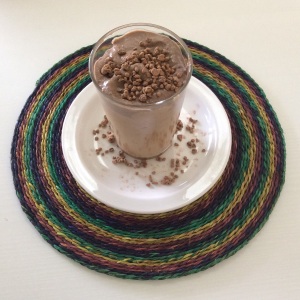
Walnut & Banana Smoothie with Raw Chocolate Mulberry Chips

This is a really thick smoothie – you will definitely need a spoon! – so feel free to adjust the amount of liquid if you prefer it thinner. It is intended as a meal replacement.

image

Walnuts are a powerhouse of nutrients: protein, Vitamin E, B vitamins, healthy oils, fibre – good for the brain, good for the heart. Apricots contain iron and Vitamin A while Romaine, Quinoa, Sunflower and Hemp Seeds are also good sources of protein, Banana has potassium – also good for your heart – and Cacao, well, what doesn’t it have and what’s not to like?!

All ingredients are organic where possible.

Ingredients

Small Banana

4-5 Organic Dried Apricots, rinsed

1 Tbsp Quinoa Flakes

3 Large Romaine Leaves, washed and chopped

1 Tbsp Sunflower Seeds

1 Tbsp Raw Hemp Seeds*

1 Tbsp Raw Cacao Powder *

Handful Walnut Pieces or Halves

1 Tbsp Dried Mulberries*

1 Tbsp Raw Chocolate Mulberry Chips* to sprinkle on top

1 Small Glass Fresh Apple Juice + some filtered water if you want it a little thinner

Blend all except the extra Raw Chocolate Mulberry Chips, then sprinkle them on top. Sit back, relax and savour this raw chocolate smooth sensation!

This is for you, K! 😉

*from The Raw Chocolate Company

Copyright: Chris McGowan

B12: What Is It & Do We Need to Supplement?

After ‘Where do you get your protein/calcium/iron from?’ most vegans will sooner or later have to face the B12 question.

It is an important topic, but not just for vegans: B12 deficiency can occur in meat-eaters (farm animals are often deficient and require supplementation),  as well as pregnant women and breast-fed infants whose mothers are vegan, whilst the over-50’s can be deficient due to poorer absorption.

So what is B12, why do we need it, where do we find it, how much do we need and in what form?

B12 is a water-soluble vitamin that is one of the compounds required by the body to convert food into energy. It is required for a healthy nervous system, good bone health and in the development and protection of nerve cells and red blood cells.

B12 deficiency can have severe effects on adults, babies and children, long-term vegans, raw food and macrobiotic vegans, the breast-fed infants of vegan mothers and can lead to serious complications in pregnancy such as pre-eclampsia and neural tube defects.

Symptoms of deficiency can be fatigue, anaemia, poor concentration, gastrointestinal disorders, tingling in hands and feet, and irritability. Severe deficiency can lead to nerve damage, Alzheimer’s disease, pernicious anaemia, spinal cord degeneration and heart disease. There is a also a higher risk of bone fractures.

B12 is produced by micro-organisms and is present in the soil in which we grow our food – or at least, it used to be. A combination of demineralisation through modern farming methods and our concerns about hygiene and bacteria – resulting in the cleansing of soil from vegetables – means we can’t just rely on normal food sources: we are advised to include fortified foods or take supplements.  Well, some experts do and some aren’t too sure! More on this later.

Non-vegans routinely obtain B12 from animal sources: cooked liver, fish/seafood, poultry, eggs, milk amd cheese. However, as I said earlier, these sources are becoming less reliable and older people whether omnivores or vegans are less able to absorb the amounts necessary for healthy bodily functions.

Recommended daily amounts tend to vary from country to country, so you may need to do a little research to find out if you are getting enough.

The Vegan Society in the UK recommends eating fortified foods such as breakfast cereals, plant milks, yeast extract or nutritional yeast with every meal to obtain 3 mcg (micrograms) per day OR a daily supplement of at least 10 mcg OR a weekly supplement of at least 2000 mcg. Good quality organic Aloe Vera juice is also a good source of B12.

It is best to take little and often but the less often you have it the more your body needs, so a higher dose weekly supplement should also provide enough protection.

Traditionally, vegans have relied on sea vegetables and algae such as spirulina, nori and so on, as well as barleygrass, but there is now some doubt as to their efficacy:  recent studies have concluded that these sources are unreliable and possibly dangerous due to contamination. They are believed to contain B12 analogues which can interfere with B12 absorption and metabolism.

Most experts seem to advise supplementation.

But even this is not without controversy! Here comes the science bit: Many supplements are in synthetic form which is not as bioavailable and the general consensus seems to be that Methylcobalamin is the most bioavailable source and ideally a supplement should be a combination of Methylcobalamin and Adenosylcobalamin.

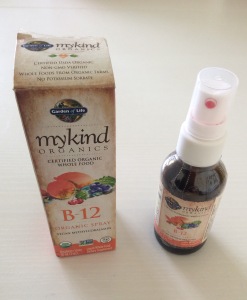
imageSublingual sprays are often preferred to tablets. Global Health Centre recommends VeganSafe B12.

I found it very hard to find an organic B12 supplement and they are very expensive. However, they do last a long time. I had to buy mine from Mykind Organics in the US. I have been taking a weekly spray of 5000 mcg for about 6 months now and my B12 levels are fine. It is raspberry flavoured and very easy to use.

I hope this has helped clarify this issue, it is difficult to be sure of getting the right information when even those trained in this area aren’t even in full agreement!  Watch the short video of a debate on the subject by a panel of experts in nutrition at the end of this article.

Sources: The Vegan Society

Forks Over Knives

Global Healing Centre

Dr Steven Lin

Copyright: Chris McGowan

How To Make Almond Milk

Home-made almond milk is so much tastier than that bought in cartons and is easy to make, especially if you have a high-speed blender. We use the Optimum 9200 from Froothie easy to use, easy to clean. The Retro Super Blend can also cope well with nuts, but we tend to use that for smoothies and the Optimum for milk as it has a slightly larger capacity.

Almonds are the king of the nut world in terms of nutrients: they are alkaline and full of vitamins and minerals, including B vitamins, Calcium and Vitamin D.  1 oz or 28g (a small handful) contains about 6g of protein. Most of the fat content is the healthier mono-unsaturated type.

So, have a go at making your own, it is a very satisfying activity. Because it is a very hands-on exercise, do make sure you wash your hands and nails thoroughly before starting.

All ingredients are organic where possible. This recipe makes about 1 litre.

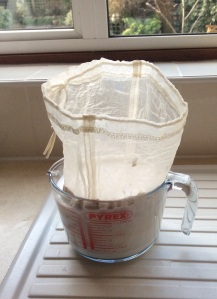
You will need something to strain the milk, we use a nut milk bag bought on Amazon and still going strong a year later. It is easy to rinse out afterwards, do it straightaway under running hot water and hang up to air dry.

Method

Soak 1 Cup Raw Almonds overnight in enough filtered water to cover them.

image

They will look plump after soaking.

Drain and rinse. The rinse water removes phytates which bind to minerals in the body and prevent absorption.

Pour the soaked almonds into the blender with:

3 or 4 Cups Filtered Water, depending how creamy you like it

1 or 2 Pitted Medjool Dates, depending on how sweet you like it

A good pinch of Pink Himalayan Salt

Optional: 1/2 Tsp Vanilla Extract

Blend on Fast for about 60 secs.

image

Strain gently through a nut milk bag or muslin cloth into a large jug.

Let it run through first, then very gently begin to squeeze. Don’t be too enthusiastic about this or you’ll end up with more on you and the work surface than in the jug! Be patient. It’s worth it.

image

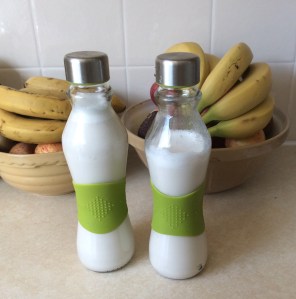
It can keep up to 4 days in an airtight jug or glass bottle (see Grip & Go below) in the fridge, but I doubt you will manage to make it last that long! It’s too good.

image

Ps You can dry the pulp on the lowest setting of the oven and use it as flour, in veggie burgers, or as it is in raw treats etc. See here for my Raw Pitch Dark Figgy Almond Slices.

Copyright: Chris McGowan

Rocket-Powered Smoothie


image

Adding greens to your smoothies gives them and you an extra boost of important nutrients: Proteins, Vitamins, Minerals and Fibre.

Rocket, or Arugula, is a cruciferous vegetable – like Kale and Sprouts – which are associated with a lower risk of cancer, in particular lung and colon cancer. It provides Calcium and Vitamin K for bone health, antioxidants, Iron and B Vitamins, including Folate, and contains nitrates, which lower Blood Pressure and the amount of oxygen required during exercise, while enhancing athletic performance.

It has a light, slightly herby flavour and is not at all overpowering when combined with fruit, nuts and seeds. I was pleasantly surprised the first time I tried it when we ran out of Romaine Lettuce.

(Remember to alternate cruciferous with non-cruciferous greens to protect your thyroid health).

This is a thick smoothie, you’ll need a spoon! (You can reduce the oats if you want it thinner).

Ingredients

1 Banana

2 Tbsps Gluten-Free Oats

A Large Handful Rocket Leaves

1 Rounded Tbsp Sunflower Seeds

1 Tbsp Cashew Nut Butter

1 Tsp Wheatgrass Powder

1/2 Mango

1 Tbsp Dried Mango Pieces

Small Glass of Fresh Apple Juice + a little water if you want a thinner smoothie

Blend and serve! Add ice if you’re not sure about the greenery, it helps when you’re not accustomed to green smoothies, but this has such a fruity flavour from the dried mango and apple juice, you’ll be fine ☺️

Copyright: Chris McGowan

Sprouting for Health, Energy and the Environment!

Recently I published a recipe for Warming Stir-Fry with Avocado, Alfalfa and Sprouted Beans and was asked where to obtain the beansprouts. Well, the answer is, your kitchen counter!

It so easy to grow your own, takes no time or effort and they provide protein and oodles of more useable nutrients than cooked foods. Enzymes, vitamins, minerals, fibre and essential fatty acids (that burn fat and are usually in short supply in most diets) increase dramatically during the soaking and sprouting process and are more easily absorbed by the body.

Not only are homegrown sprouts good for body and soul (growing your own is a satisfying and life-affirming activity), but they are also good for the environment. Buy organic, untreated seeds, nuts, beans or legumes and you omit nasties: pesticides, additives and other unwanted chemicals. Ready grown sprouts are often treated with chemicals before packaging. (NB You need to buy seeds from a health food shop/supermarket or online eg Amazon etc NOT a gardening shop!)

They are inexpensive, 1 tablespoon of seeds produces several days’ worth of sprouts – depending on how often and how many people eat them! You can rotate the varieties and have your own little sprout garden in your kitchen, producing nutrient-dense plants for your salads, sandwiches and lunch-boxes and the children will enjoy the process of soaking, watering and watching them grow as well as benefiting from the foods themselves.

So, what do you need and how do you do it?

There are 3 methods: the third actually produces microgreens, a stage further on than sprouting and involves soaking seeds and sprinkling them on a tray of organic soil, watering and letting them grow. But we want to produce sprouts, so you need either a sprouting tower like this one:

This thirty-year-old tower has 3 sprouting trays, a lid that is ventilated to allow air to circulate and a bottom tray where the water drains off – if buying new, check it is BPA-free

or large, wide-mouth mason jars with either sprouting lids (available from healthfood stores or online), cheesecloth or muslin and a rubber band to keep it in place.

You can sprout most seeds, nuts, beans or legumes – except kidney beans, they are poisonous if eaten raw.

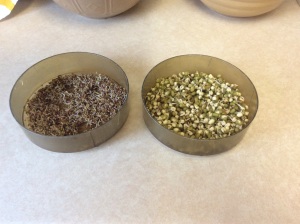
For either method, the first thing you need to do is wash your hands – hygiene is important, then rinse the seeds and pick out any grit or discoloured or broken ones and soak them overnight in pure water. For 3 trays, you could use 1-2 teaspoons of alfalfa or broccoli seeds between 2 of them and 1-2 tablespoons of mung beans in the third. Use 3 times as much water as seeds. (Broccoli seeds provide many times more nutrients than normal broccoli).

image

(If using jars, you can put them straight into the containers). Next morning, drain them into the trays and rinse again (one type of seed per tray, they all grow at different rates).

Rinse and drain twice a day, pouring away the excess water.

image

After Day 1, the mung beans have swollen and are beginning to sprout.

For the jars, cover and stand upside down, if possible at a slight angle, and rinse at least twice a day.

The sprouts will grow faster in warmer weather and in exceptionally hot weather may need an extra rinse. Don’t let them dry out but don’t overwater! Be sure to drain off the excess to prevent mould and bacteria developing.

image

After 2 days, they are well on their way. These were growing during a very cold February.

image

3 days and the mung beans are about an inch long and ready to use! The alfalfa needs another couple of days.

image

When you harvest the mung beans, rinse and either store them as they are, covered in the fridge – they will last up to a week or more – or place in a bowl of water, swish them around and the green hulls will float off and can be removed if desired. Some people think they are a little bitter, but of course you will be discarding nutrients too.

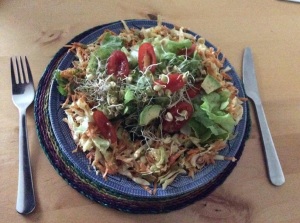
The sprouts can be used in salads, sandwiches, with stir-fries or as garnish for warm soups (the less heat the more nutrients you retain).

image

Sprouted seeds, beans, nuts and legumes are highly nutritious and are particularly rich in Vitamins A, B Complex, C and E, but alflafa is also a good source of Calcium, and a very good source of Vitamin K, Folate, Iron, Magnesium, Phosphorus, Zinc, Copper and Manganese.

image

28596240_Unknown

Broccoli Sprouts

You can have a lot of fun with the kids using alfalfa sprouts:

image

There have been comments in the media about the dangers of ecoli in beansprouts. Firstly, I would say commercial enterprises don’t much like us growing our own rather than buying their nutrient-poor, mass-produced products and secondly, providing you keep up your hygiene standards: wash your hands, drain off the soaking water and scrub out the trays/jars, then all should be fine.

We have been growing sprouts for 30 years and neither my family nor friends have had one problem with ecoli.

I hope this helps inspire you to start producing your first beansprouts.

Copyright: Chris McGowan